
Recent Posts
Homemade Turkey Stock
Homemade Turkey Stock
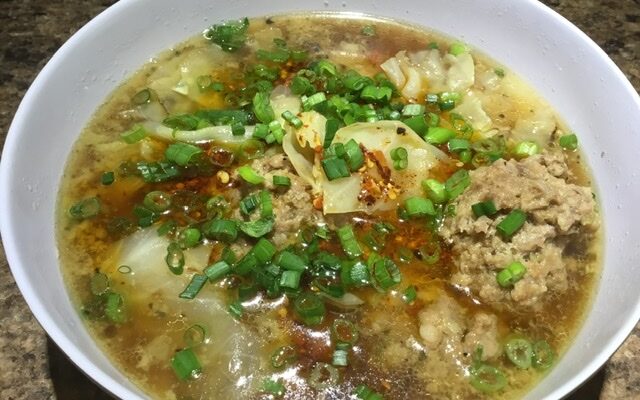
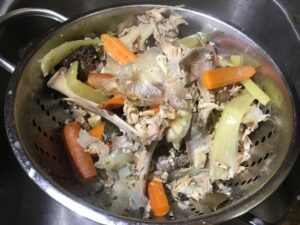
Wait a minute. Hold it right there. Are you really going to throw away that turkey carcass? That carcass still has much more to give. What you really should be doing is turning that carcass into a batch of turkey stock. I couldn’t be easier to make and is a great substitute for chicken stock. I honestly think that it has a lot more flavor than chicken. If you don’t have a carcass, you can make stock out of wings, drumsticks, necks, and backs.There are a couple of different approaches to making your turkey stock. The most basic way to make stock is to throw the carcass, your mirepoix(carrots, celery, and onion), garlic, peppercorns, and bay leaves into a pot of water and simmer it for hours; which is this particular recipe. If you want really extract the flavor from the carcass, place your carcass on a baking pan and roast it at 400 degrees for 1 hour. While that is roasting, sauté the mirepoix and garlic in the stock pot. Doing both of these steps will result in a richer, darker turkey stock. Personally, I don’t like to add any salt to my stock. I adjust the saltiness when I’m cooking with it; just in case another ingredient happens to be salty.When you’ve finished reducing the stock to your likeness, strain through a colander. I like to nibble on any leftover meat that was attached to the carcass. If not using within a few days, freeze the stock down into ice cube trays and store in freezer bags.
Ingredients
- turkey carcass
- 3 carrots cut into sticks
- 3 ribs celery cut into sticks
- 1/2 medium onion
- 1 head garlic
- 1 tbsp black peppercorns
- 3 bay leaves
- 1 gallon water
Instructions
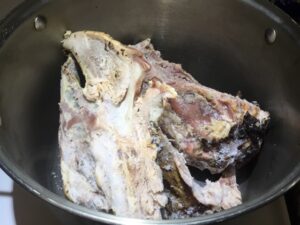
- Place the turkey carcass in a large stock.
- Add in the vegetables, peppercorns, and bay leaves.
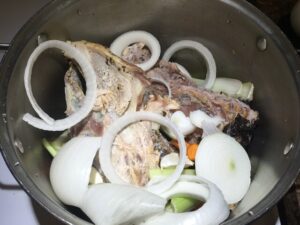
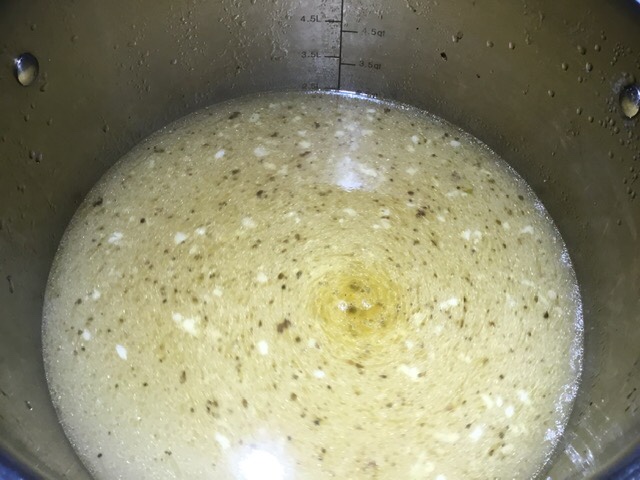
- Pour in a gallon of water. Turn on high heat. Bring to a boil. Reduce the heat to medium and simmer for 6 hours.
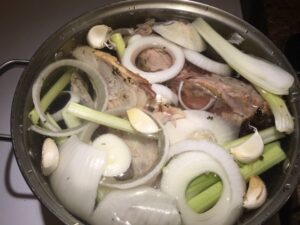
- You will want to reduce the stock by at least half. I reduced a gallon down to 6 cups.
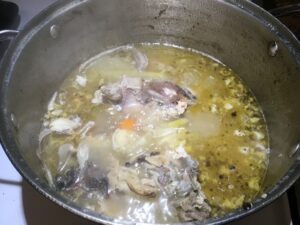
- Strain the stock of the carcass and other ingredients.
Tamagoyaki
Tamagoyaki
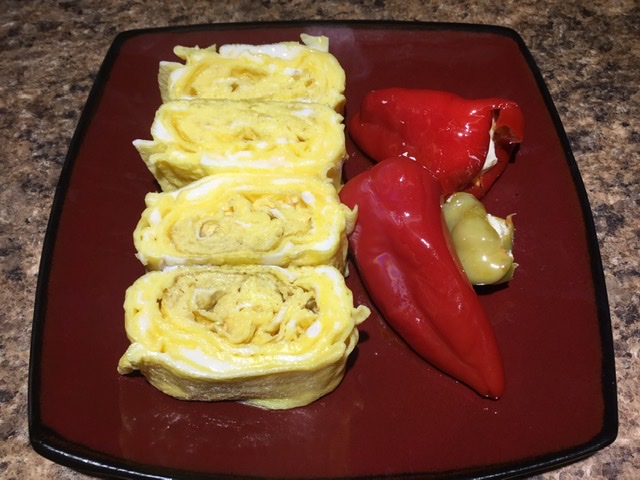
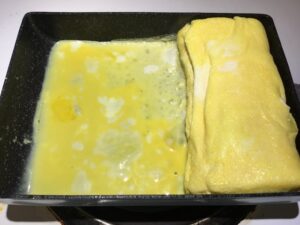
Tamagoyaki literally means “grilled egg” in Japanese. You will typically see tamagoyaki served for breakfast, as a side dish, in bento boxes, and even in sushi as nigiri, wrapped with nori on top of sushi rice. In Japan, customers dining in at a sushi restaurant will order tamago nigiri first to asses the chef’s sushi making skills.Tamagoyaki consists of eggs, mirin, soy sauce, and sugar cooked on a special omelette griddle called a yakimakinabe. The griddle has high edges, with one side flat and the other rounded. Small amounts of the egg mixture is cooked, then rolled to the flat side of the griddle. The omelette is pushed to the rounded side of the griddle and more of the egg mixture is poured in. Once the eggs set, the egg roll is rolled over the set eggs. These steps are repeated until all of the egg mixture is used up and you’re left with a thick omelette roll. The omelette is then sliced into 4 pieces.
Equipment
- tamagoyaki griddle
Ingredients
- 4 large eggs beaten
- 1 tbsp mirin
- 1 tbsp soy sauce
- 1 tbsp sugar
- 1 pinch salt
- vegetable oil
Instructions
- Whisk together the eggs, mirin, soy sauce, sugar, and salt.
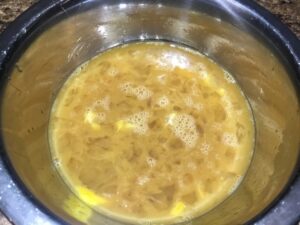
- Lightly grease your tamagoyaki griddle with 1 tsp of vegetable oil over medium heat. Pour in 1/4 cup of the egg mixture and let set for a minute.
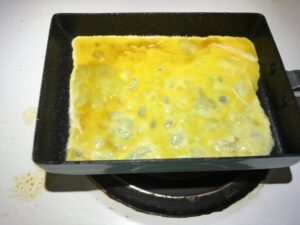
- Gently push the eggs to the flat side of the griddle. Your first ladle of the eggs doesn’t need to be rolled perfectly.
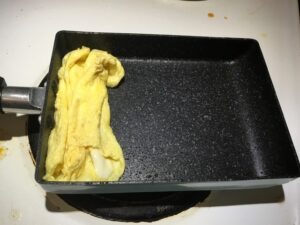
- Push the egg to the rounded side of the griddle. Pour in another 1/4 cup of the egg mixture. Let it set for 30 seconds.
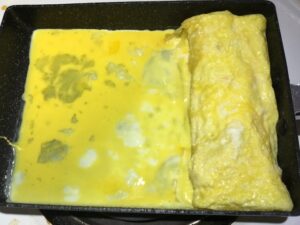
- Roll the omelette over to the flat side of the griddle. Push the omelette to the rounded side of the griddle.
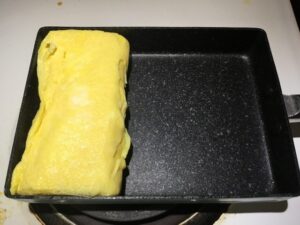
- Repeat the steps until all of the egg mixture is used up. You should get somewhere between 4-6 rolls during the entire cooking process.

Belizean Stewed Chicken
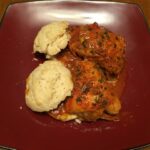
Belizean Stewed Chicken
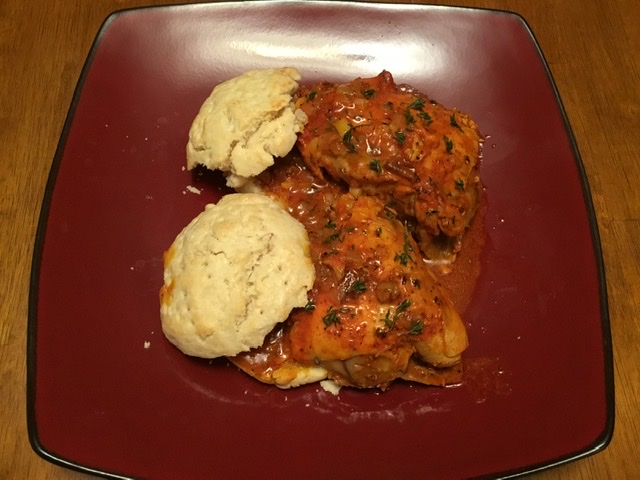
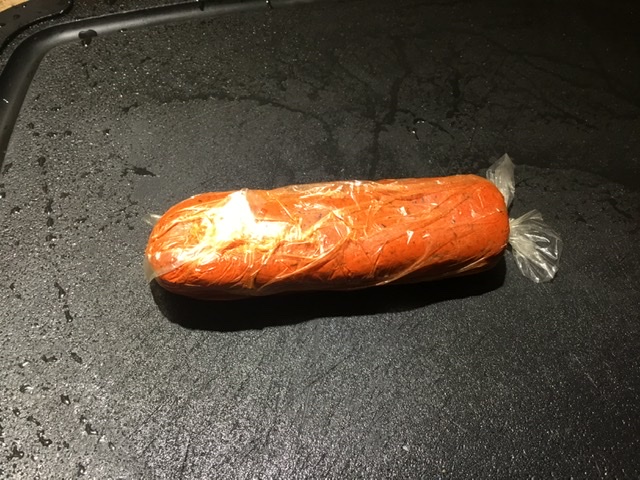
My good friend Sam Gilles was just recently in Belize and brought me back some recado rojo paste. It was literally tied up in a sandwich bag. This really excited me because that shows how homemade this paste really is. Now I had to do some research on how to cook with it. What I discovered is that it is pretty much the same thing as achiote paste that I’ve used in making pibil chicken, which is from the Yucatán part of Mexico, right next to Belize. Now everything is making sense.Stewed chicken is one of the most popular dishes in Belize. Chicken pieces are marinated in the recado paste, then stewed with a ton of onions until the meat falls off the bone. The chicken is typically served with beans and rice or with Belizean-style johnny to sop up the sauce. It turns out that you can buy recado rojo at most Latin markets. If you can’t find recado paste, achiote is an acceptable substitute.
Servings: 4
Ingredients
- 2 lbs bone in chicken thighs
- 1/2 cup red recado paste
- 1/4 cup vegetable oil
- 1 medium onion sliced
- 1/2 lime juiced
- salt to taste
Instructions
- Place the recado paste in a bowl.

- Mix the paste with 1/2 cup water until it is thinned out.
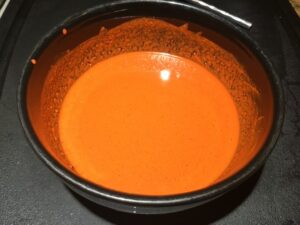
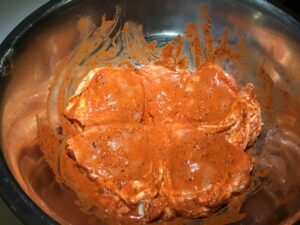
- Marinate the chicken thighs with the recado for at least 4 hours, preferably overnight.
- Heat up cooking oil in a Dutch oven over medium high heat. Brown the chicken thighs for 5 minutes a side. Remove from the pot.
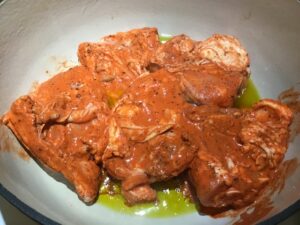
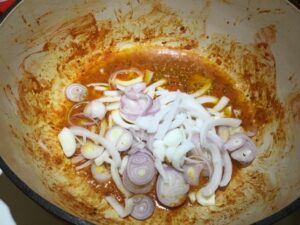
- Sauté the onions for 5 minutes.
- Add the chicken back into the Dutch oven with the rest of the marinade. Pour in 1 cup of water.

- Bring to a boil. Cover. Reduce the heat to medium low and simmer for 90 minutes.