Tag: appetizer
Requeijao Cremoso
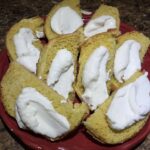
Requeijao Cremoso (Brazilian Cream Cheese Spread)
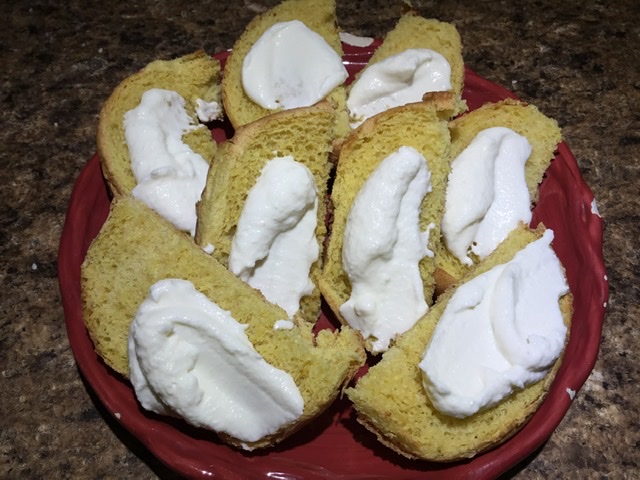
This isn’t anywhere close to the American cream cheese spread that you are use to. Requeijao cremoso has the consistency of a creamy ricotta. The cheese spread only has 5 ingredients and can be made in 15 minutes. Let the spread firm up in the refrigerator for 4 hours before serving.
Equipment
- food processor
Ingredients
- 2 liters whole milk + 1 cup warm milk
- 4 tbsp vinegar
- 2 tbsp butter
- 1/2 cup shredded mozzarella cheese
- 1/2 tsp salt
Instructions
- Bring a pot of milk to boil.
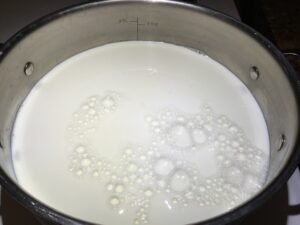
- Turn off the heat. Pour in the vinegar. The milk will start to separate the curds from the whey.
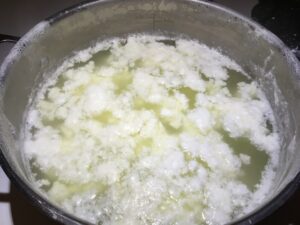
- Strain the whey from the curds. Rinse under cold water to get the vinegar flavor out.
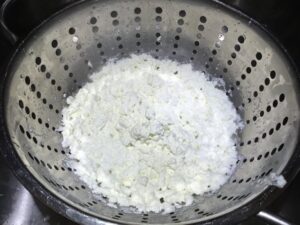
- Add the curds, butter, salt, mozzarella, and 1 cup of warm milk to a food processor.
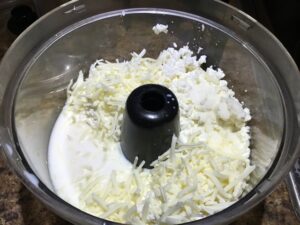
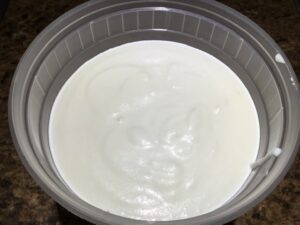
- Purée the ingredients together. Pour into a container and let rest for 4 hours before serving.
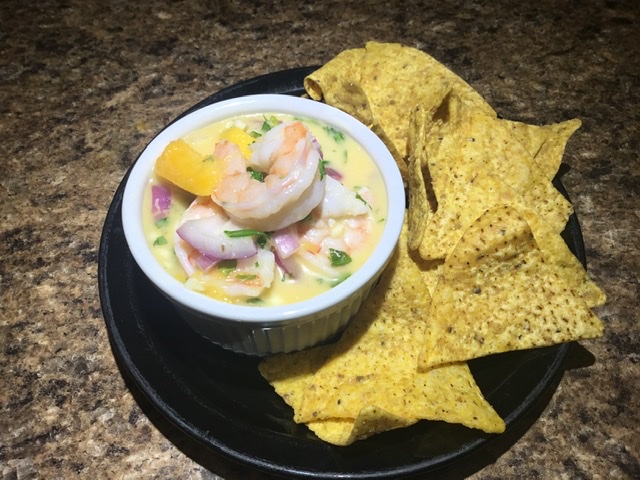
Coconut Mango Shrimp Ceviche
Coconut Mango Shrimp Ceviche
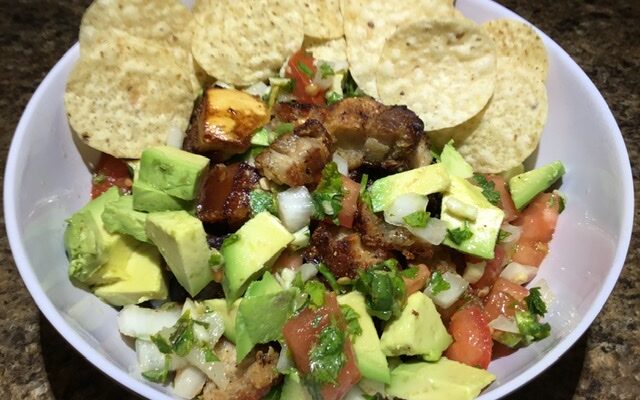
There are 3 ways you can make this shrimp ceviche. You can make it exactly how it is in the recipe; omitting the mango and having it be just shrimp; or omitting the shrimp, adding 2 more mangoes and making the ceviche vegan. All are good, but I prefer everything in my ceviche. Serve the ceviche with tortilla chips.It is best to use shrimp sized 26/30 count or smaller. Shrimp that are larger may need to be cut in half. While the shrimp in this recipe are briefly cooked for 2 minutes, you can cut them into smaller pieces and marinate them raw in just the lime juice for a couple of hours before combining the rest of the ingredients.
Servings: 4
Ingredients
- 1 lb shrimp peeled and deveined
- 1/2 red onion thinly sliced
- 3 garlic cloves finely chopped
- 5 limes juiced
- 2 tbsp parsley chopped
- 2 tbsp coconut milk
- 1 tbsp aji amarillo paste
- 1 sweet mango diced
- salt to taste
Instructions
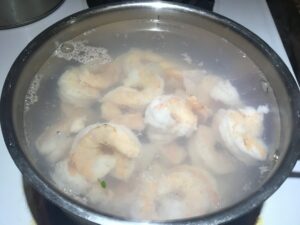
- Bring a pot of salted water to boil. Cook the shrimp for 2 minutes. Drain and run under cold water to completely cool.
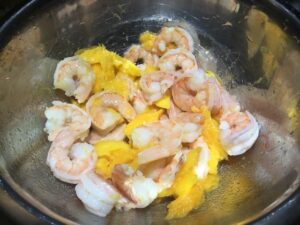
- Add the mango to the shrimp. Set aside.
- Mix together the red onion, garlic, lime juice, parsley, coconut milk, and aji amarillo paste.
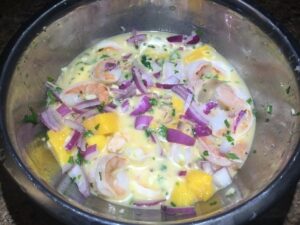
- Pour over the shrimp and mangos. Season with salt. Add 2 ice cubes. Serve immediately.
Tuna Empanadas

Tuna Empanadas
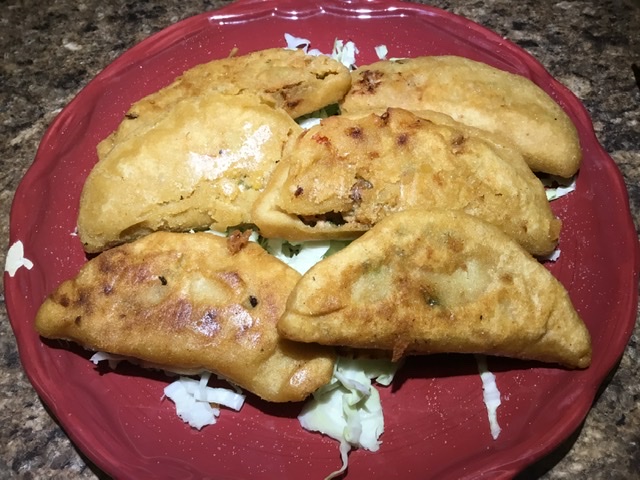
I’m a huge fan of empanadas and their various forms. These tuna empanadas are quite exquisite. There just isn’t any old can of tuna in the filling. I like to use this fancy Mexican brand of tuna that is actually whole chunks of yellowfin. It only costs $1 more than your Starkist or Chicken of the Sea and is light years ahead in quality. The dough to these empanadas has ancho chili powder in it. You can find ancho chili powder in your grocery store’s international aisle in the spice section. You can also use a whole dried ancho chili pepper and either grind it in a spice grinder or soak it in warm water for 25 minutes, then purée it in a blender. Either way is good. You can skip adding the ancho all together, but it does give the dough a nice color and some added flavor.You will need to use a tortilla press to flatten the dough. I like to take a gallon sized ziplock bag and cut it apart in 2 pieces to use as a barrier for the press. Place a dough ball in the center of the press on top of one of the plastic sheets. Place the other sheet over the top. Flatten the dough ball to a little less than 1/4” thick. Take off the top plastic sheet. Place 2 tbsp of the filling in the center of the dough. Using the bottom plastic sheet, fold the dough over in half, crimping the edges. Now you have an empanada. The empanadas only take 4 minutes a side to fry. Serve them on a bed of shredded cabbage with the hot sauce of your choosing. You can make large batches of the empanadas and freeze them down on a baking sheet. Store them in freezer bags.
Equipment
- tortilla press
Ingredients
Empanada Filling
- 2 tbsp olive oil
- 1/2 medium white onion diced
- 2 garlic cloves minced
- 1 medium tomato diced
- 1 can yellowfin tuna drained
- 2 tbsp parsley chopped
- salt and pepper to taste
Empanada Dough
- 1 cup masa flour
- 1 cup warm water
- 1 tbsp ancho chili powder
- 1/2 tsp salt
Instructions
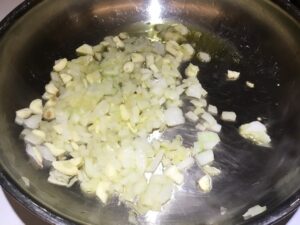
- Heat up cooking oil in a sauté pan over medium high heat. Sauté the onions for 5 minutes. Add in the garlic and cook for 1 minute.
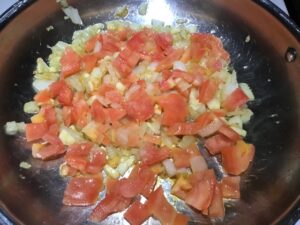
- Add in the tomatoes. Cook for 5 minutes.
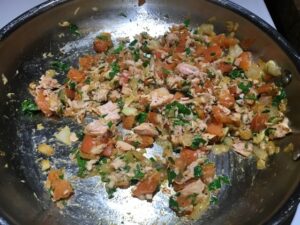
- Turn off the heat. Stir in the tuna and parsley. Season with salt and pepper. Let cool.
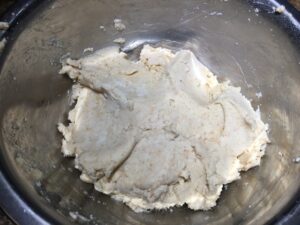
- Mix together all of the dough ingredients. Roll into 6 equal sized balls.
Empanada Assembly
- Place a dough ball on the center of a tortilla press. I like to cut apart a gallon sized ziplock bag to use as a barrier for the press.
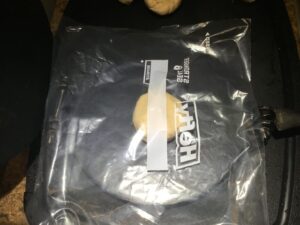
- Mash it down to 1/4” thick.
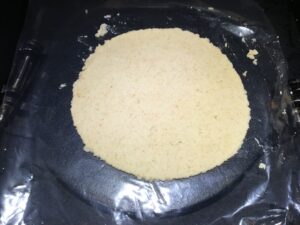
- Place a couple of tbsp of the filling in the center of the dough.
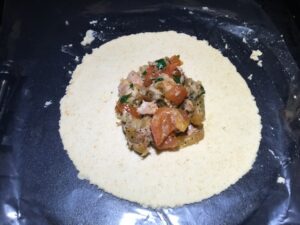
- Using the bottom piece of the ziplock bag, fold the dough over the center and crimp the edges.
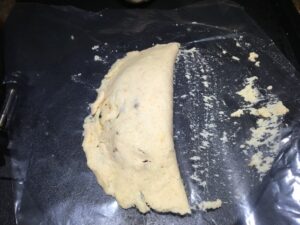
- Make the rest of the empanadas and let sit on parchment paper.
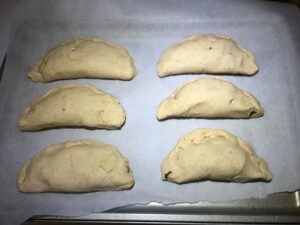
- Heat up a 1/4” deep of vegetable oil in a sauté pan over medium high heat. Place the empanadas in the oil, making sure to not overcrowd the pan.
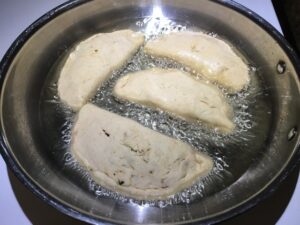
- Fry for 4 minutes a side.