
Tag: East Asian


Authentic Moo Shu Pork

Authentic Moo Shu Pork
I love moo shu pork, but I must admit tha I’ve never had the authentic version. If you are American, you are used to eating the Chinese take out version with pork, cabbage, and wood ear mushrooms served in steamed pancakes with hoisin sauce. The real version isn’t eaten with steamed pancakes and hoisin sauce, but with just steamed rice as a stir fry. The preparation is very similar. A few of the ingredients are different. Once you prep all of the ingredients, the moo shu only takes 5 minutes to make.
Ingredients
Marinade
- 8 oz pork sirloin sliced into strips
- 1 tbsp Shaoxing cooking wine
- 1/2 tsp salt
- 1/4 tsp white pepper
- 1 tsp cornstarch
Sauce
- 1/4 cup chicken stock
- 1 tbsp light soy sauce
- 1/2 tsp Chinkiang vinegar
- 1/2 tsp sesame oil
- 1 tsp cornstarch
Stir Fry
- 1/2 cup dried wood ear mushrooms
- 1/4 cup dried lily flower
- 2 large eggs beaten
- 1 small white onion sliced
- 1 tsp ginger minced
- 1/2 cucumber sliced
- 3 tbsp vegetable
Instructions
- Mix all of the marinade ingredients together. Coat the pork in the marinade. Set aside.

- Soak the dried wood ear mushrooms and lily flower in boiling water for 30 minutes.

- Mix all of the sauce ingredients together. Set aside.

- Heat up cooking oil in a wok or a large sauté pan over high heat. Add the pork. Cook for 30 seconds a side. Remove from the pan.

- Add the beaten egg. Scramble and cook for a minute. Remove from the pan.

- Add the onion, cucumber, and ginger. Sauté for a minute.

- Add in the rehydrated mushrooms and lily flower.

- Pour in the sauce. Let thicken for 30 seconds. Add back in the pork and eggs. Cook for 1 more minute.


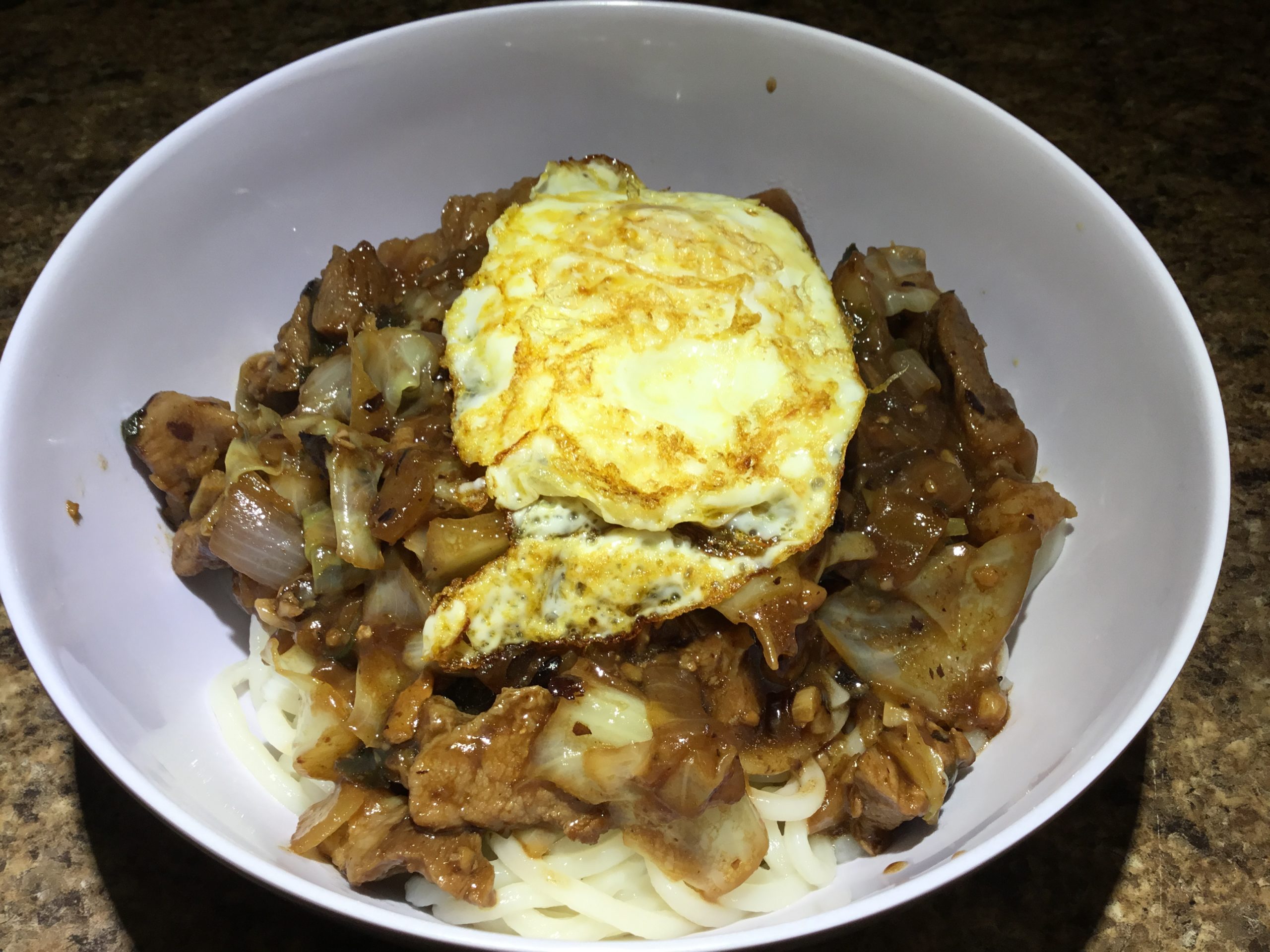
Jjajangmyun (Korean Noodles with Black Bean Sauce)
Jjajangmyun (Korean Noodles in Black Bean Sauce)
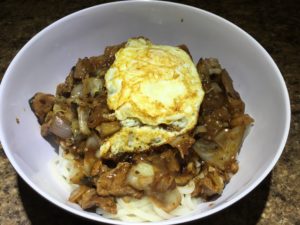
Jjajangmyun has its roots in Chinese cuisine. You may have seen it on Chinese menus as chicken in black bean sauce. The main difference between the Chinese and Korean versions is that the Korean jjajangmyun is typically sweeter due to the addition of sugar.So what is black bean paste? In Asian cuisine, black bean paste isn’t made from black beans, but fermented soy beans and carmel color. The Korean version of this paste is bitter and is sweetened with sugar. The paste is the essential ingredient in black bean garlic sauce, which is pretty much the base of jjajangmyun.Preparing jjajangmyun is fairly simple. You can use either pork or chicken for the protein. Pork shoulder and chicken thigh will work the best. A little bit of fat is necessary in this dish. Once the sauce is finished, it is ladled over Korean jjajang noodles. It is then topped off with a fried egg. If you don’t have noodles, you can put this over steamed rice; A.K.A. jjajangbap.
Ingredients
- 1 tbsp vegetable oil
- 1 lb pork shoulder 1” cubes
- 6 garlic cloves minced
- 3 green onions chopped
- 2 tbsp ginger minced
- 1/2 cup black bean paste
- 1 medium onion diced
- 1/4 head green cabbage chopped
- 1/3 cup rice wine
- 1 cup chicken stock
- 2 tbsp sugar
- 1 1/2 tbsp cornstarch dissolved in 4 tbsp of cold water
- 2 portions jjajang noodles
- fried eggs
Instructions
- Heat up cooking oil in a large sauté pan or wok over high heat. Sauté the pork shoulder for 3 minutes.
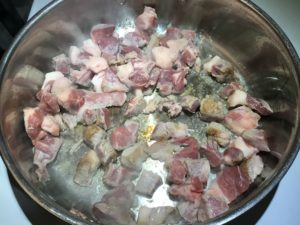
- Stir in the green onion, garlic, and ginger. Sauté for 2 minutes.
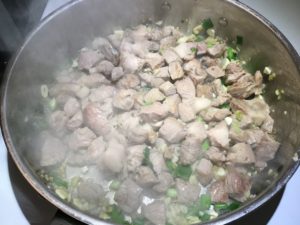
- Stir in the black bean paste. Cook for 1 minute.
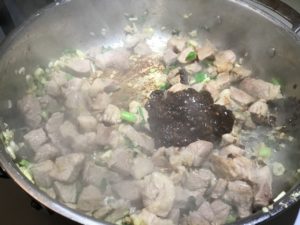
- Add in the cabbage and onions. Cook for 3 minutes.
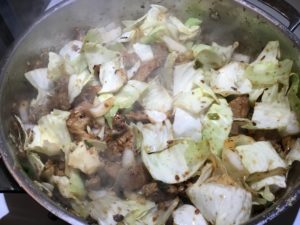
- Add in the cooking wine. Cook until the liquid has evaporated. Then add in the chicken stock and sugar. Bring to a boil. Reduce the heat to medium. Simmer uncovered for 15 minutes.
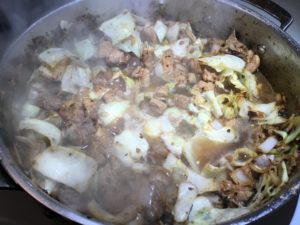
- While the pork and black bean sauce is simmering. Bring a pot of water to a boil. Add the jjajang noodles, boiling for 6-7 minutes. Drain and run under cold water.
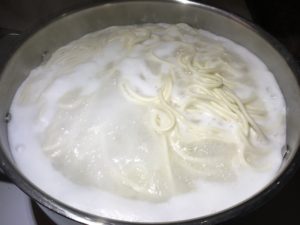
- The last minute of cooking, stir in the slurry you made of cornstarch and water. This will thicken the sauce.
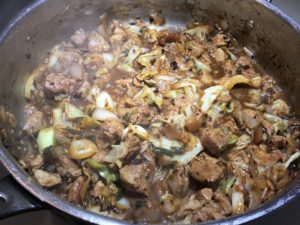
- Portion out the noodles and black bean sauce. Top with a fried egg.

Jjamppong (Seafood Noodle Soup)

Jjamppong (Seafood Noodle Soup)
Jjamppong is a Korean spicy seafood noodle soup. Despite there being a ton of ingredients in this recipe, it’s fairly simple to make and takes little time. You can adjust the heat to your liking by adding more or less gochugaru. There are a couple routes you can go when selecting the seafood for this soup. The first is the buy a frozen seafood mix, usually consisting of crab, shrimp, mussels, clams, squid, octopus, and cuttlefish. Make sure that the seafood mix is defrosted before adding to the soup. The other route to go would be to customize what seafood goes into this soup by buying fresh seafood, still in the shell. This will cost more, but will yield tremendous flavor.
Ingredients
- 4 tbsp vegetable oil
- 6 garlic cloves minced
- 2 tsp ginger minced
- 5 green onions chopped
- 4 oz pork diced
- 1 mefium onion sliced
- 6 oz cabbage shredded
- 1 small zucchini julienned
- 1 small carrot julienned
- 4 tbsp gochugaru
- 1 tbsp smoked paprika
- 2 tbsp soy sauce
- 2 tbsp oyster sauce
- 1/4 cup shaoxing cooking wine
- 6 cups chicken stock
- 1/2 tsp salt
- 2 lbs frozen seafood mix.
- 2 portions Kalguksu noodles
Instructions
- In a large pot over medium high heat, sauté the garlic, ginger, and green onions for 2 minutes.

- Add in the pork, cabbage, carrots, zucchin, and onions. Sauté for 2 minutes.

- Add in the gochugaru and smoked paprika. Sauté for a minute.

- Add in the soy sauce and oyster sauce. Sauté for 30 seconds.

- Pour in the shaoxing cooking wine and chicken stock. Season with salt. Bring to a boil.

- Add the seafood mix and cook for 3 minutes.

- Bring water to a boil in another pot. Add the Kalguksu noodles. Boil for 5 minutes.

- Drain and rinse under cold water.

- Add a portion of the noodles to a bowl. Ladle over the seafood soup. Garnish with green onions.

