Tag: Japanese
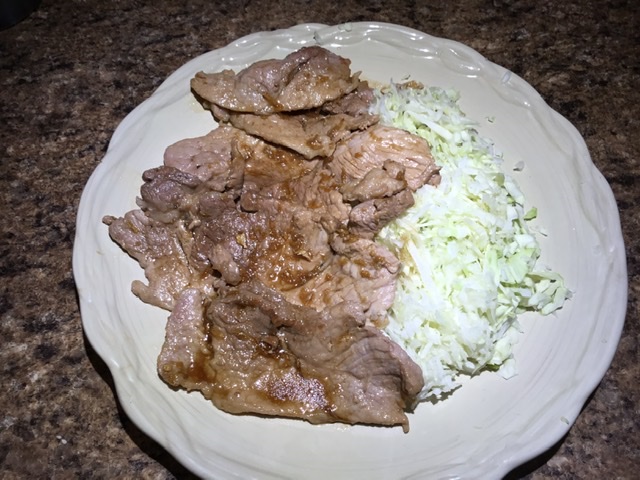
Pork Shogayaki
Pork Shogayaki
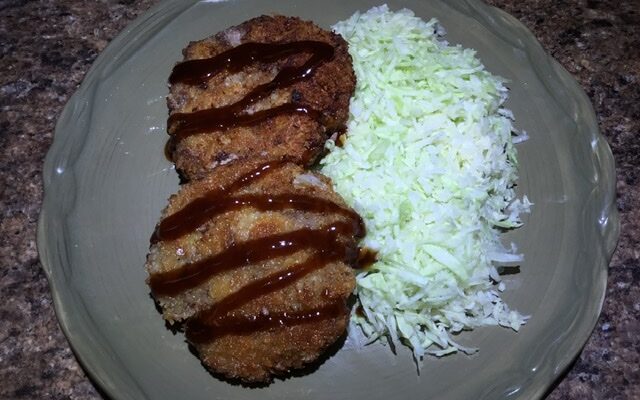
Pork shogayaki is a popular Japanese dish consisting of thinly sliced pork seared then quickly cooked in a ginger sauce. The pork is served over finely shredded cabbage and drizzled with the remaining sauce. The best thing about this tasty dish is that you can make this in under 10 minutes.
Ingredients
- 8 oz pork loin or sirloin sliced 1/8” thick or thinner
- 3 tbsp mirin
- 2 tbsp soy sauce
- 2 tbsp Sake or cooking wine
- 1 tbsp ginger grated
- 1 tbsp vegetable oil
- green cabbage shredded
Instructions
- Mix together the mirin, soy sauce, sake, and ginger. Set aside.
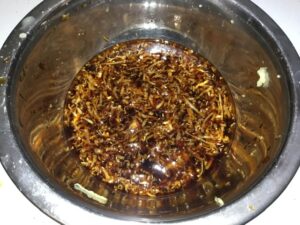
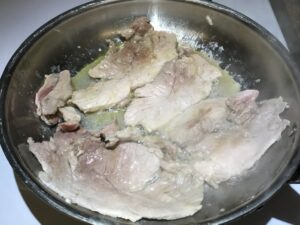
- Heat up cooking oil in a sauté pan over high heat. Add in the pork slices in a single layer.
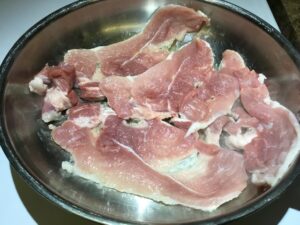
- Sear for 90 seconds-2 minutes a side.
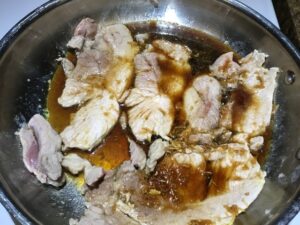
- Pour in the sauce. Cook for 2 minutes, making sure that the pork is covered in the sauce.
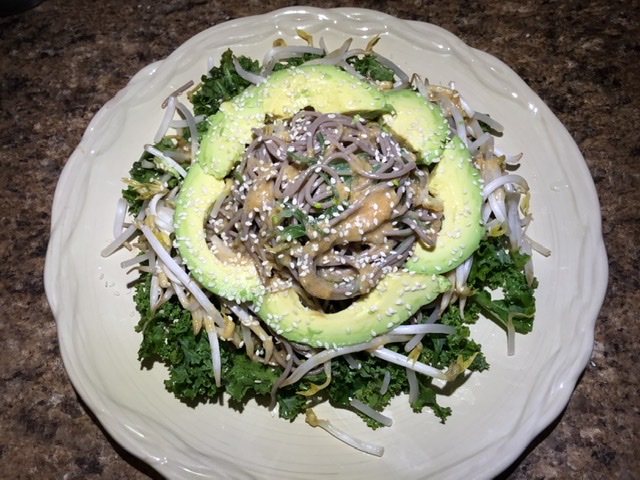
Kale Avocado Soba Noodle Salad
Kale Avocado Soba Noodle Salad
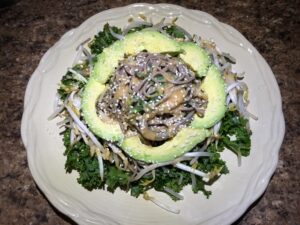
Soba noodles are made out of buckwheat and can be served cold in salads such as this one with kale. After the noodles are cooked, they are mixed with Japanese prepared seaweed salad, which you can find at any Asian market. It adds a brinyness to the noodles. The dressing’s base is made out of rice wine vinegar, sesame oil, and white miso paste, which is a fermented soy bean. It has a savory/salty taste cut with acidity of the white wine vinegar. This kale soba noodle salad is topped with avocado, bean sprouts, cilantro, sesame seeds, and more miso dressing.
Servings: 4
Ingredients
- 3 bunches soba noodles
- 1/4 cup seaweed salad
- 1 bunch kale center rib removed, chopped
- 1 cup bean sprouts
- 1 avocado sliced
- 1/4 cup cilantro leaves chopped
- 2 tbsp sesame seeds
Miso Dressing
- 1/2 cup white miso paste
- 1/2 cup rice wine vinegar
- 1/4 cup sesame oil
- 1/4 cup water
- 1/2 tbsp ginger grated
Instructions
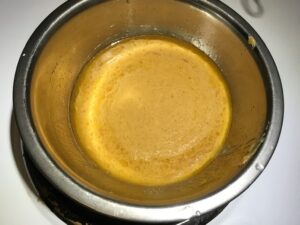
- Whisk all of the dressing ingredients together. Set aside.
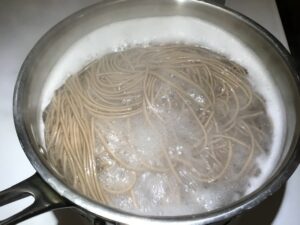
- Bring a pot of water to boil. Boil the soba noodles for 5-6 minutes. Drain. Rinse under cold water until the noodles are chilled.
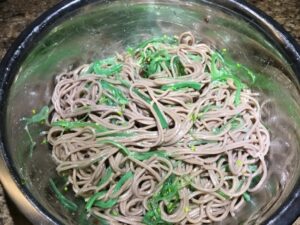
- Mix in the seaweed salad with the soba noodles and 2 tbsp of the miso dressing.
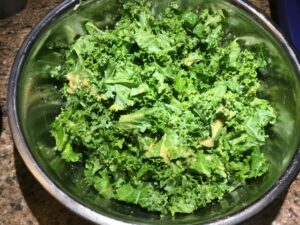
- Toss the kale with 2 tbsp of the miso dressing.
- Place a bunch of the kale in the center of a plate. Place some of the noodles in the center of the kale. Top with bean sprouts, avocado, cilantro, and more miso dressing. Sprinkle sesame seeds over the top.
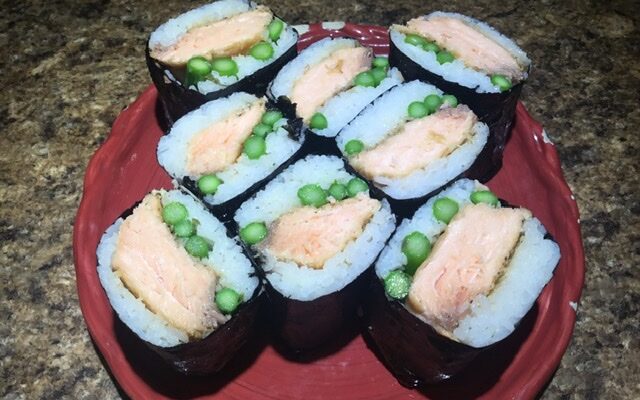
Teriyaki Salmon
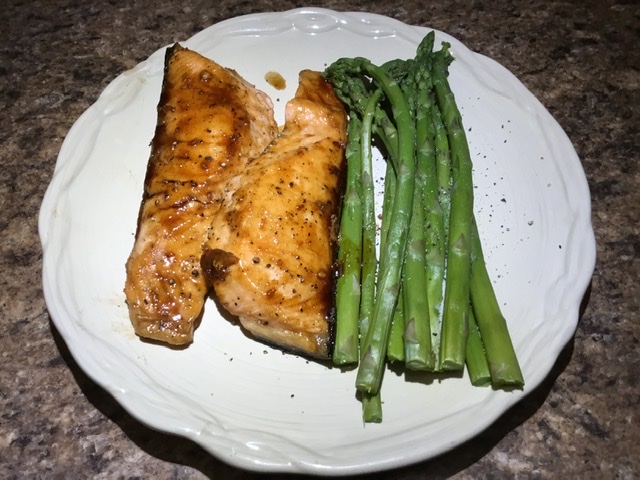
Teriyaki Salmon
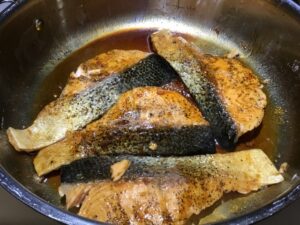
When you go to an American grocery store, you will see countless varieties of pretty horrible tasting bottled teriyaki sauces on the shelves. Honestly, because of this, teriyaki has always been a huge turnoff for me. They all have too much salt and extra ingredients that you don’t need. Puke. In a Japanese grocery store, you won’t find any. Why? Because every household in Japan makes their own. The best part is, real Japanese teriyaki only has 4 ingredients: mirin, sake, soy sauce, and sugar. It’s simple with a proper balance of sweet and salty.Japanese-style teriyaki Salmon is so much more complex than putting a sauce on salmon. The Japanese fillet their salmon at a 30 degree angle 1/2”-1” thick with the skin on instead of cutting a straight on 90 degrees portion out of the fillet. Cutting the salmon this way will do several things. It gives the salmon a wider spread of the flesh, allowing it to absorb the teriyaki. That also means that the fillets won’t require marination. Since the fillets are thinner, the salmon fillets will cook a lot faster and more evenly. It is highly important to leave the skin on the salmon while cooking. I feel that I have to repeat this again because of all the recipes I see out there removing the skin before cooking salmon. IT IS HIGHLY IMPORTANT TO LEAVE THE SKIN ON THE SALMON WHILE COOKING. For several reasons…The skin holds the fillets together. If I were to remove the skin before cooking this salmon, you’d have flaked salmon in teriyaki sauce…Between the flesh and the skin is a nice layer of fat where you get your omega 3 fatty acids. You are throwing away essential nutrients by removing the skin…It also keeps your salmon moist…Nobody said you have to eat the skin. LEAVE IT ON! I bet the same people that remove the salmon skin eat boneless skinless chicken breasts with their snotty children, Cooper and Emily.End of angry rant.
Ingredients
- 1 lb salmon fillet head end of fillet
- 1/2 tsp salt
- cracked black pepper
- 3 tbsp flour
- 2 tbsp butter
- 1 tbsp sake or rice wine
Teriyaki Sauce
- 2 tbsp soy sauce
- 1 tbsp mirin
- 1 tbsp sake
- 1 tbsp sugar
Instructions
How to fillet salmon Japanese-style
- Instead of straight on cutting smaller portioned fillets out of the whole one, the Japanese will cut the fillets 1” thick at a 30 degree angle.
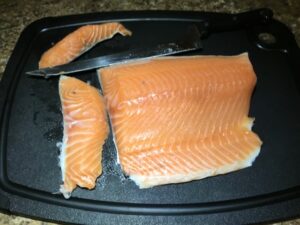
- Thinly cutting the salmon this way gives a wider spread of the flesh, allowing to absorb more of the teriyaki.
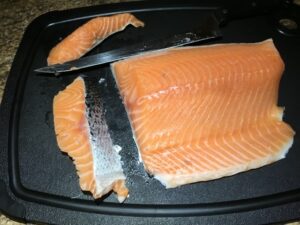
- Cut the entire fillet.
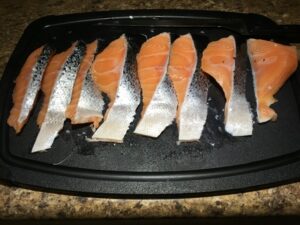
Teriyaki Salmon
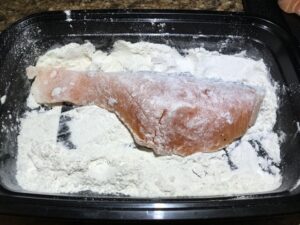
- Season each fillet with salt and pepper. Dust the fillets in flour. Shake off any excess.
- Melt the butter in a sauté pan over medium heat. Add in the salmon fillets skin side down. Sear for 3 minutes.
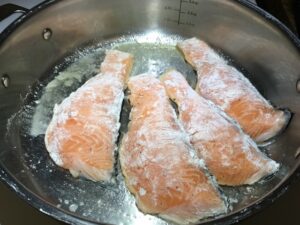
- Flip over. Add the saki and cover, cooking for another 3 minutes. Remove from the pan.
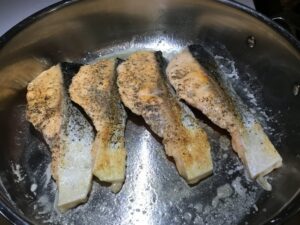
- Mix together all of the teriyaki ingredients.
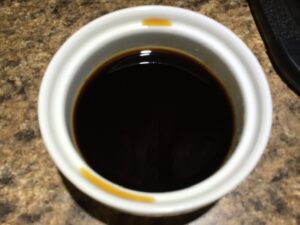
- Pour in the pan.
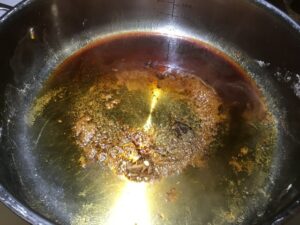
- Once it starts to boil, add the salmon fillets back in.
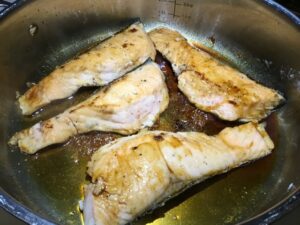
- Toss and coat each side in the teriyaki sauce.