Tag: Korean

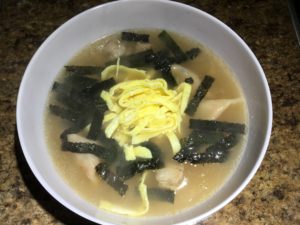
Rice Cake Soup with Kimchi Dumplings and Pork Riblets
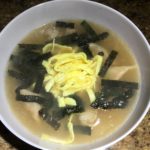
Rice Cake Soup with Kimchi Dumplings and Pork Riblets
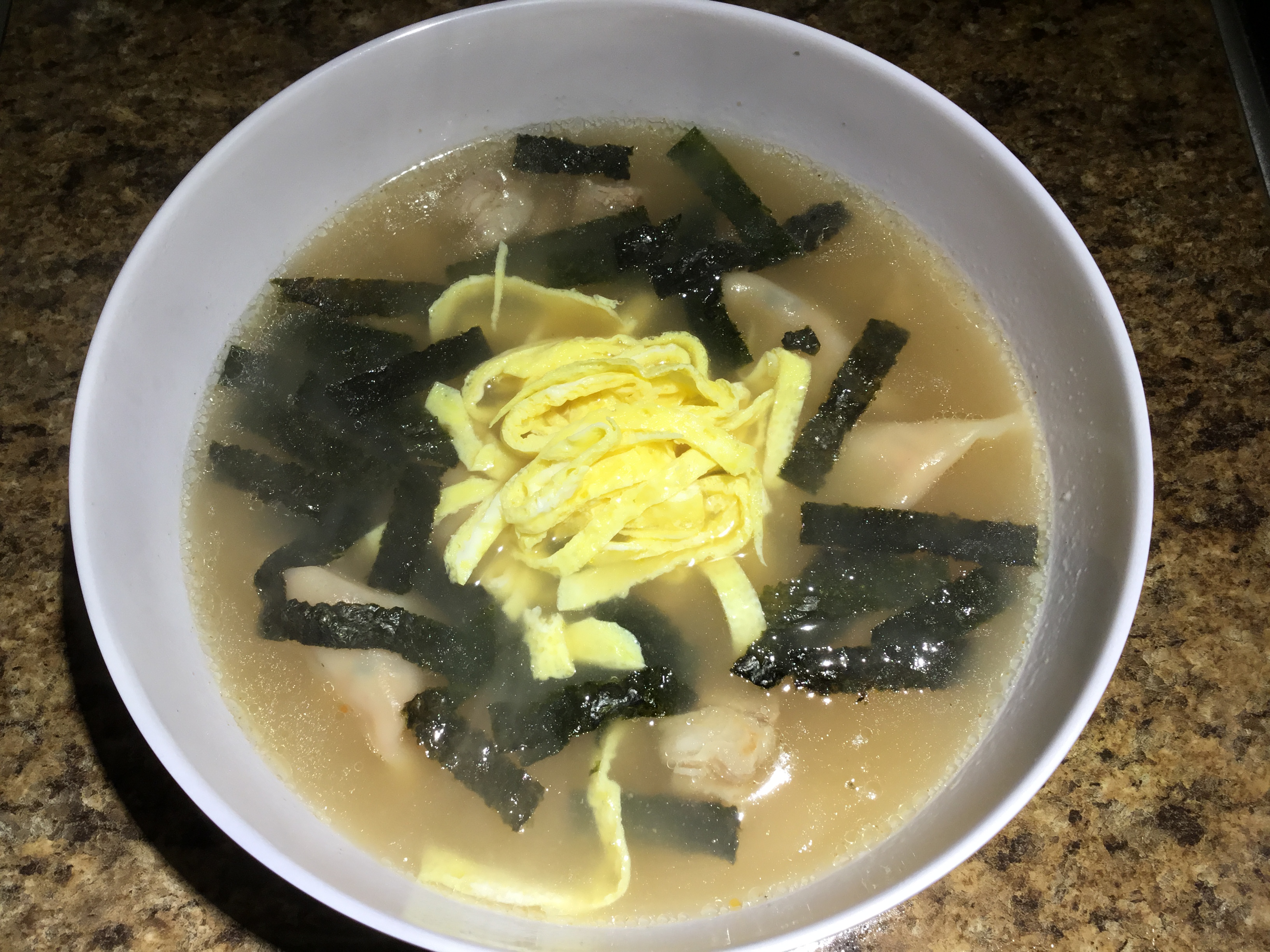
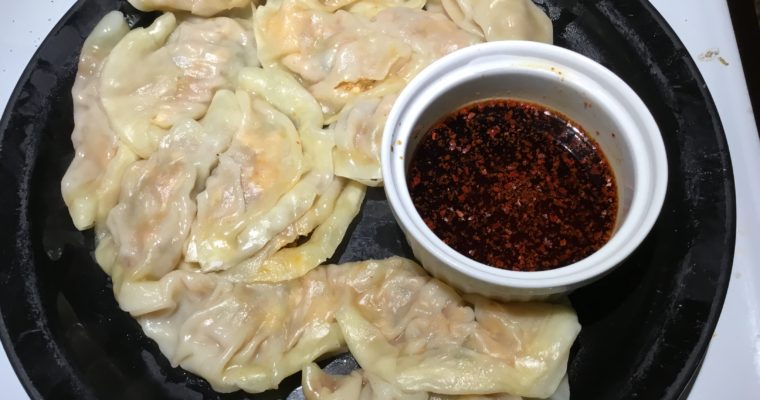
If you happen to have all of these ingredients on hand like I did, this is a super simple soup recipe that very comforting. I ate this a couldn’t stop hugging my belly. Nothing but love inside.I had an extra 1/2lbs of pork riblets sitting in my fridge. I had just made a shit ton of kimchi dumplings. I always have 2 types of rice cakes on hand. I was baked. It was 9AM on a Tuesday morning. Soup time.There’s nothing complicated about making this soup. Pretty straight forward. When making the egg garnish make sure your egg skillet is very hot. Since it is only 1 beaten egg, it cooked very quick. Less than a minute. I didn’t even need to flip it. It rolled up quite nicely. Then I sliced it so the eggs are in thin strips
Servings: 2
Ingredients
- 8 oz Pork riblets
- 1 tbsp soup soy sauce
- 5 cups water
- 1 tbsp minced garlic
- 2 green onion chopped
- 2 cups rice cakes
- 10 kimchi dumplings
- salt and pepper to taste
Garnish
- 1 large beaten egg, fried sliced thin
- nori thin strips
Instructions
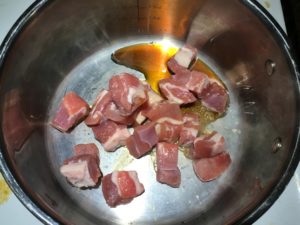
- n an 8 quart pot, brown the pork riblets with the soup soy sauce. Cook the riblets completely through.
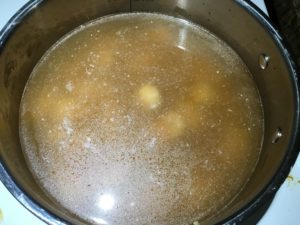
- Add the water, minced garlic, and green onion. Bring to a boil and simmer for 20 minutes.
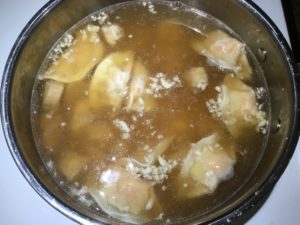
- Add the dumplings and the rice cakes. Simmer for another 10 minutes.
- Ladle 5 dumplings into a bowl with half of the rice cakes and riblets. Add salt and pepper to taste. Garnish with egg and nori strips.
Anchovy Stock (Instant Pot)
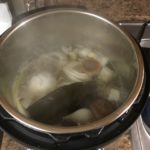
Anchovy Stock
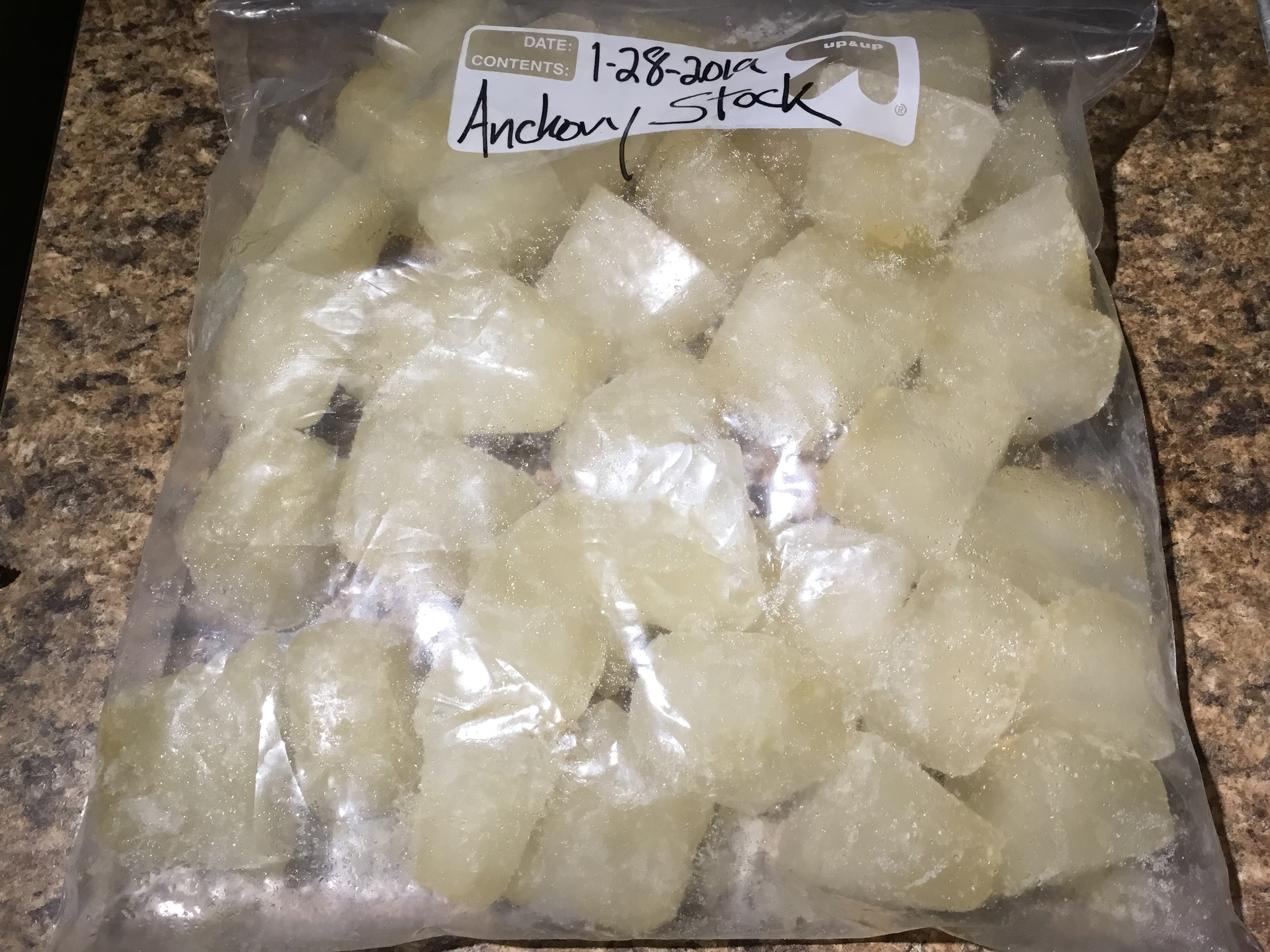
Anchovy stock is used in a lot of Korean soups such as Fish Cake soup, which I’ll make in a later segment. This is a really simple recipe. If you want it to be more basic, omit everything except the anchovies soaking in the water. I recommend making a large batch of this and freezing it down in ice cube trays. Throw the fish stock cubes in a large freezer bags for later use.
Ingredients
- 12 medium dried anchovies
- 2 dashima (edible kelp) 3″ squares
- 6 cups water
- 4 oz korean radish large chunks
- 1/2 onion left whole
- 4 garlic cloves
- 2 green onions chopped
- 4 dried shiitake mushrooms
- 12 cups water
Instructions
- Add anchovies and dashima to 6 cups of water. Let soak for 20 minutes.
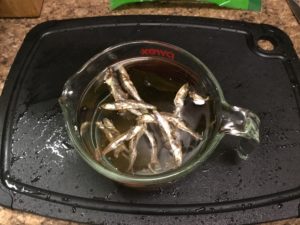
- In a large stock pot, bring 12 cups of water to a boil with the korean radish, onion, garlic, green onion, and shiitake mushrooms. Simmer for 20 minutes.
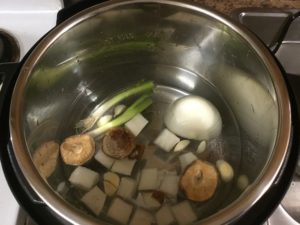
- Add the anchovy and dashima water to the pot of stock. Simmer for another 10 minutes.
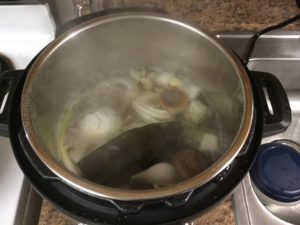
- Strain. Boom. Now you have anchovy stock.
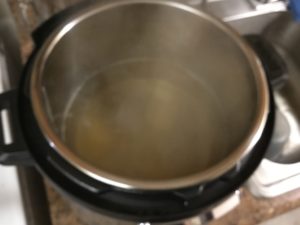
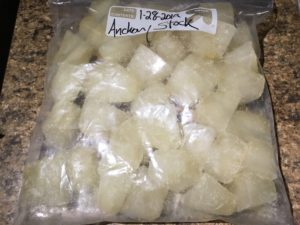
- Any leftover anchovy stock can be frozen in ice cube trays, then transferred to a freezer bag for later use. 2 cubes = 1/2 cup of stock.
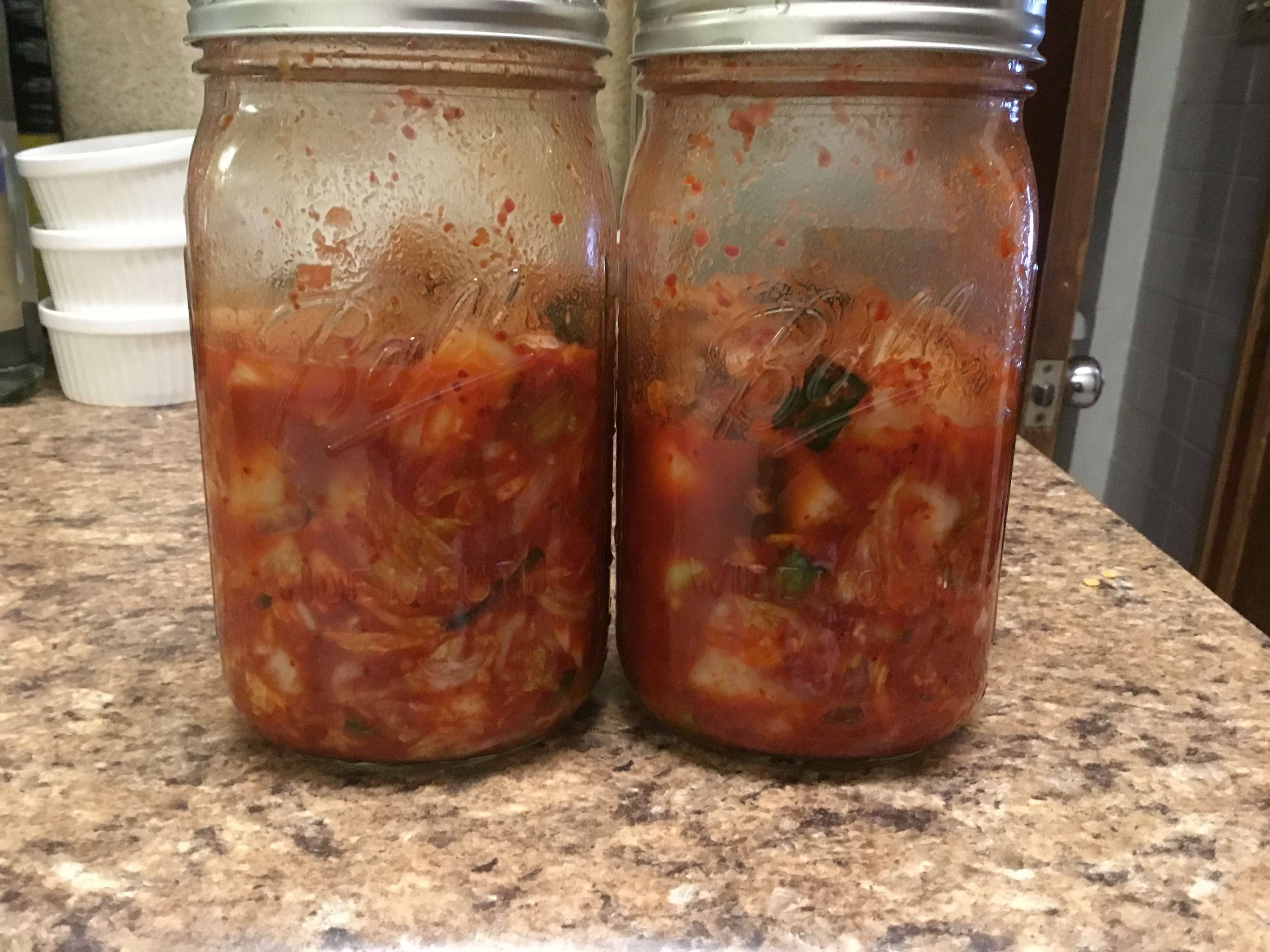
Easy Kimchi
Easy Kimchi
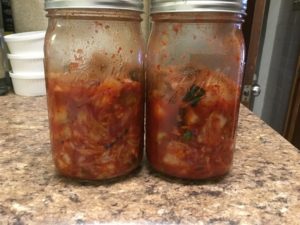
Kimchi is literally eaten with every meal in Korea. It is very healthy to eat; filled with probiotics and vitamins. The concept of making kimchi is very similar to making sauerkraut: fermented salted cabbage, but spicy. This recipe is a simplified version, also known as mak kimchi. Traditional kimchi is called pogi kimchi, where the cabbage is left quartered and the seasoning is rubbed in-between each leaf, then left to ferment. There is also a lot more salting in the process. If you eat at a Korean restaurant, they will typically bring you a huge chunk of the quartered kimchi and cut it apart with a pair of scissors table side. 1 whole Napa cabbage looks like it’s going to be a lot, but once salted, shrinks down to a quarter of the amount. If you double this recipe, you should be able to fill 3 – 20oz jars.There are many additions that you can put in your kimchi while fermenting. It is common to see Korean radish, oysters, Korean pear, garlic chives, etc. If you want your kimchi to be less spicy, reduce the amount of gochugaru. If you don’t have salted shrimp, add in more fish sauce. This kimchi recipe will last in the refrigerator for at least 2 months after the 3 week fermentation process.
Ingredients
- 1 napa cabbage, about 4 lbs
- 3/4 cup salt
- 3 cup water
- 3 green onion chopped
Kimchi Seasoning
- 1/2 cup gochugaru red chili flakes
- 2 tbsp salted shrimp
- 2 tbsp fish sauce
- 2 tbsp minced garlic
- 1 tsp grated ginger
- 1/2 tbsp sugar
Instructions
- Cut the Napa cabbage into 1 1/2″ pieces.
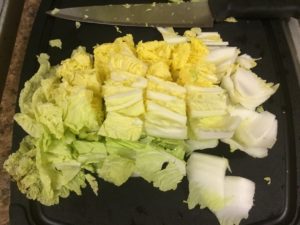
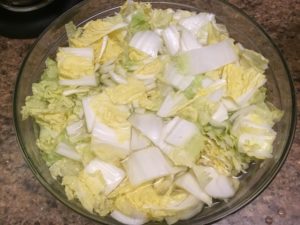
- In a large bowl, dissolve the salt in 3 cups of water. Add in the Napa cabbage. Let soak for 2 hours. Now is a great time for bong rips.
- Rinse the cabbage at least 3 times. Make sure to get rid of as much excess water as possible.
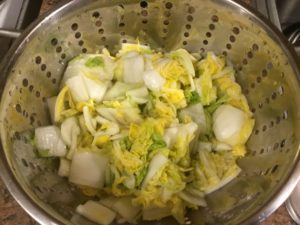
- Mix all of the Kimchi seasoning ingredients together.
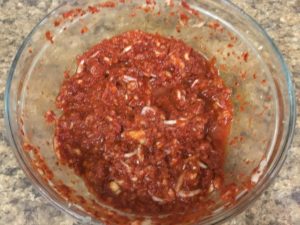
- Mix together in a large bowl the Napa cabbage, green onions, and the kimchi seasoning. Make sure that all of the cabbage is evenly coated. For best results, mix this by hand with kitchen gloves.
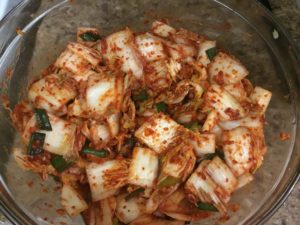
- Place the kimchi in an airtight jar or container. Let sit out at room temp for at least 12 hours. Then store in the refrigerator and let ferment for at least 3 weeks before consumption.