Tag: pork
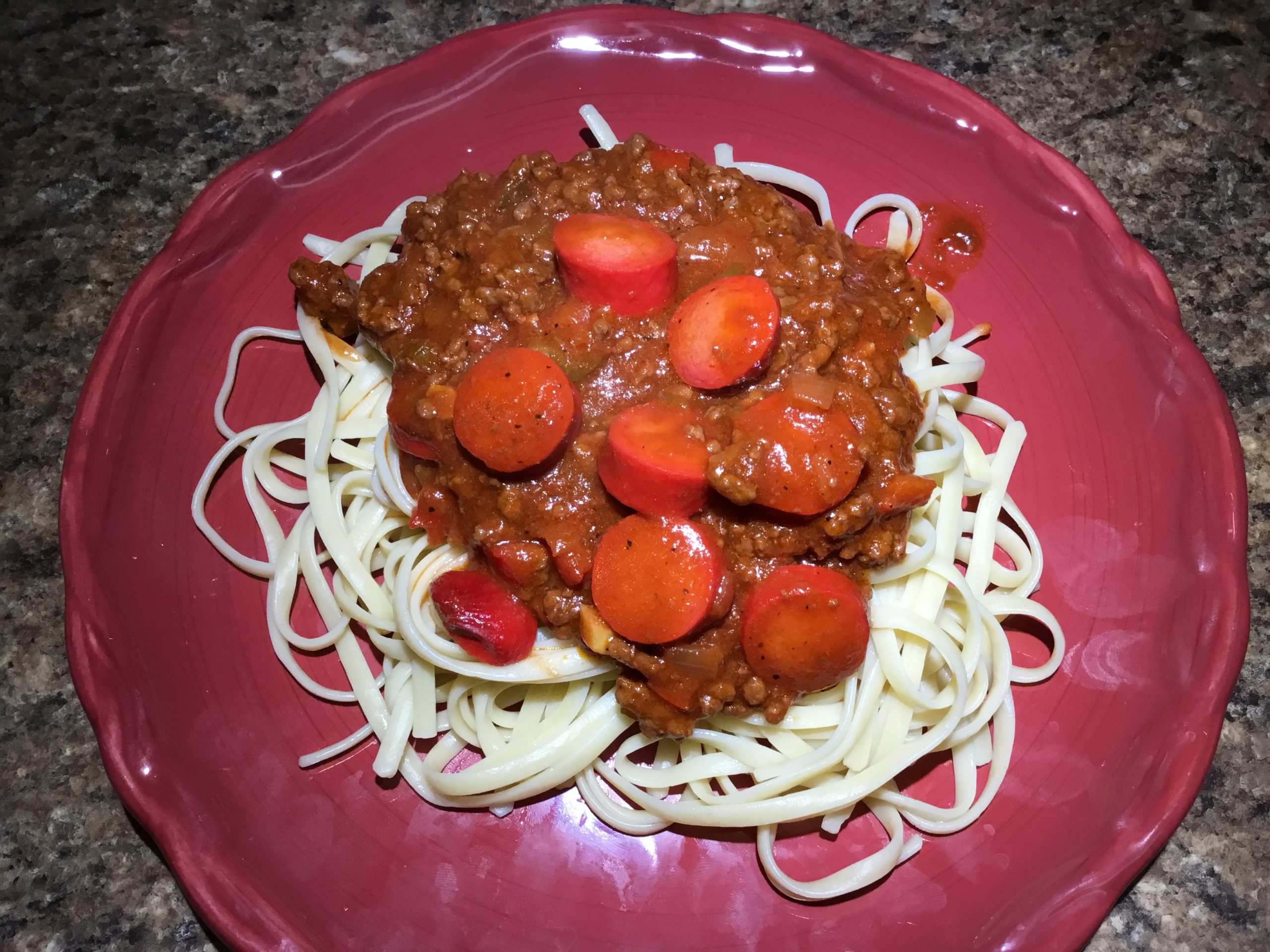
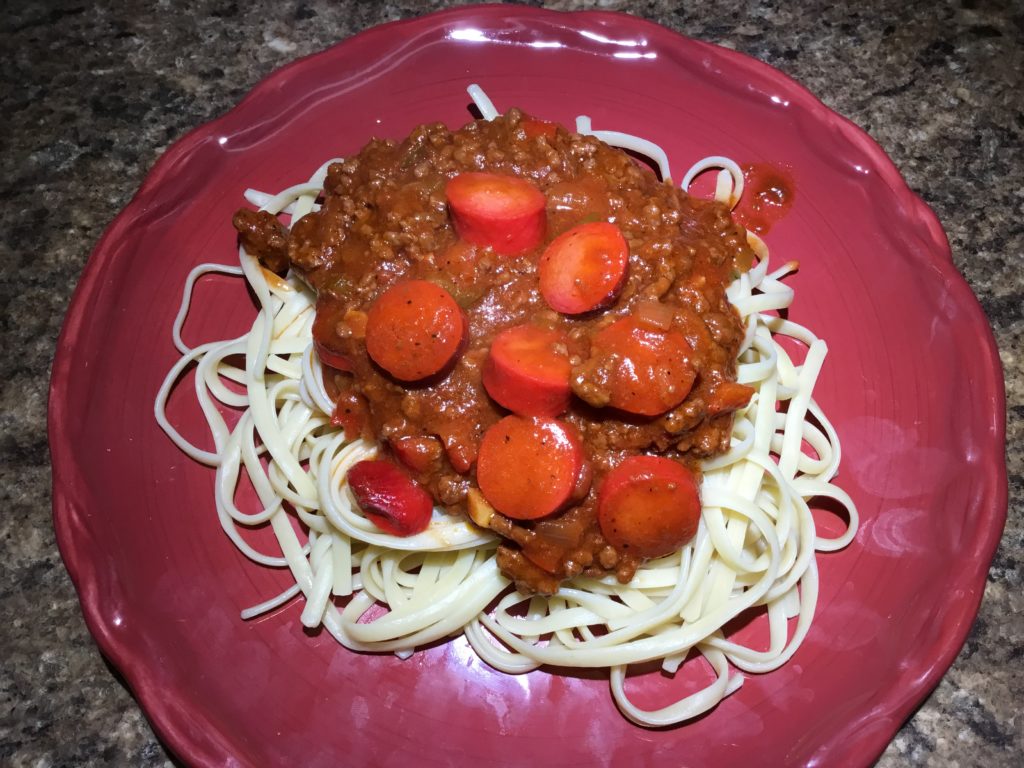
Filipino-Style Spaghetti
Filipino-Style Spaghetti
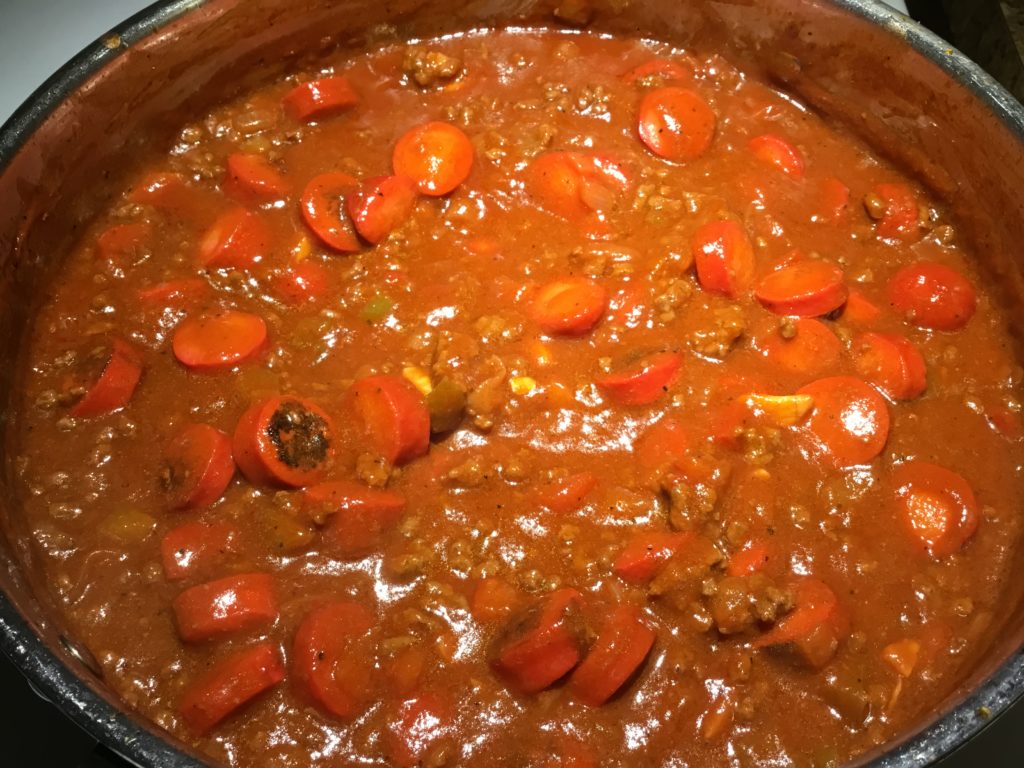
I have to say, when I first learned about this recipe, I was kind of turned off. Hotdogs in a bolognese sauce??? Banana ketchup??? What high ass would come up with such a thing? I was really curious about how this would taste. So I kept an open mind and prepared it. Hands down this is one of the best spaghetti sauces I’ve ever eaten. The sauce is a lot sweeter than traditional Italian bolognese from the banana ketchup. The hotdogs add a smokey, salty, porkiness that is so necessary to the flavor. Give this recipe a try. Seriously, some of the best comfort food that I’ve had in a long time.
Servings: 4
Ingredients
- 1 tbsp vegetable oil
- 4 Filipino hotdogs sliced
- 1 medium onion diced
- 6 garlic cloves minced
- 1 bell pepper diced
- 1 lb ground beef
- 2 cups tomato sauce
- 1/2 cup tomato paste
- 1 cup banana ketchup
- 1 cup beef stock
- 1 tbsp sugar
- salt and pepper to taste
- 1 lb dry spaghetti noodles cooked
Instructions
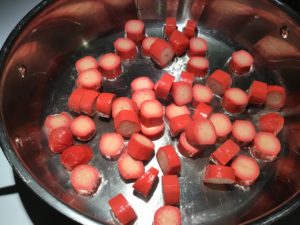
- Heat up cooking oil in a large saucepan over medium high heat. Sauté the Filipino hotdogs for 4 minutes. Set aside.
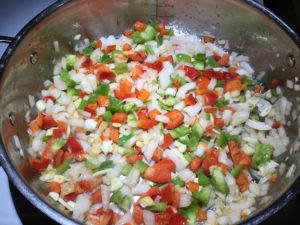
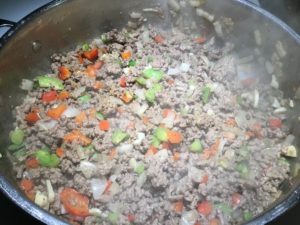
- Sauté the onions, garlic, and bell peppers for 5 minutes.
- Add in the ground beef, breaking up all of the clumps. Brown for 8 minutes.
- Stir in the tomato sauce, tomato paste, banana ketchup, beef stock, sugar, salt, and pepper. Simmer covered over medium heat for 30 minutes.
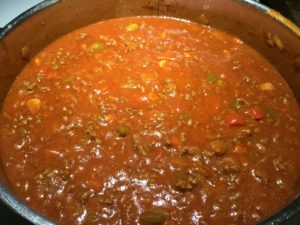
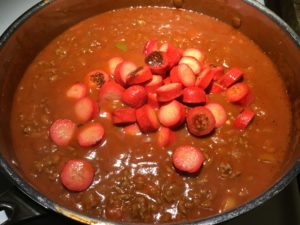
- Add back in the hotdogs. Simmer for another 10 minutes.
Pancit Luglug
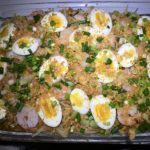
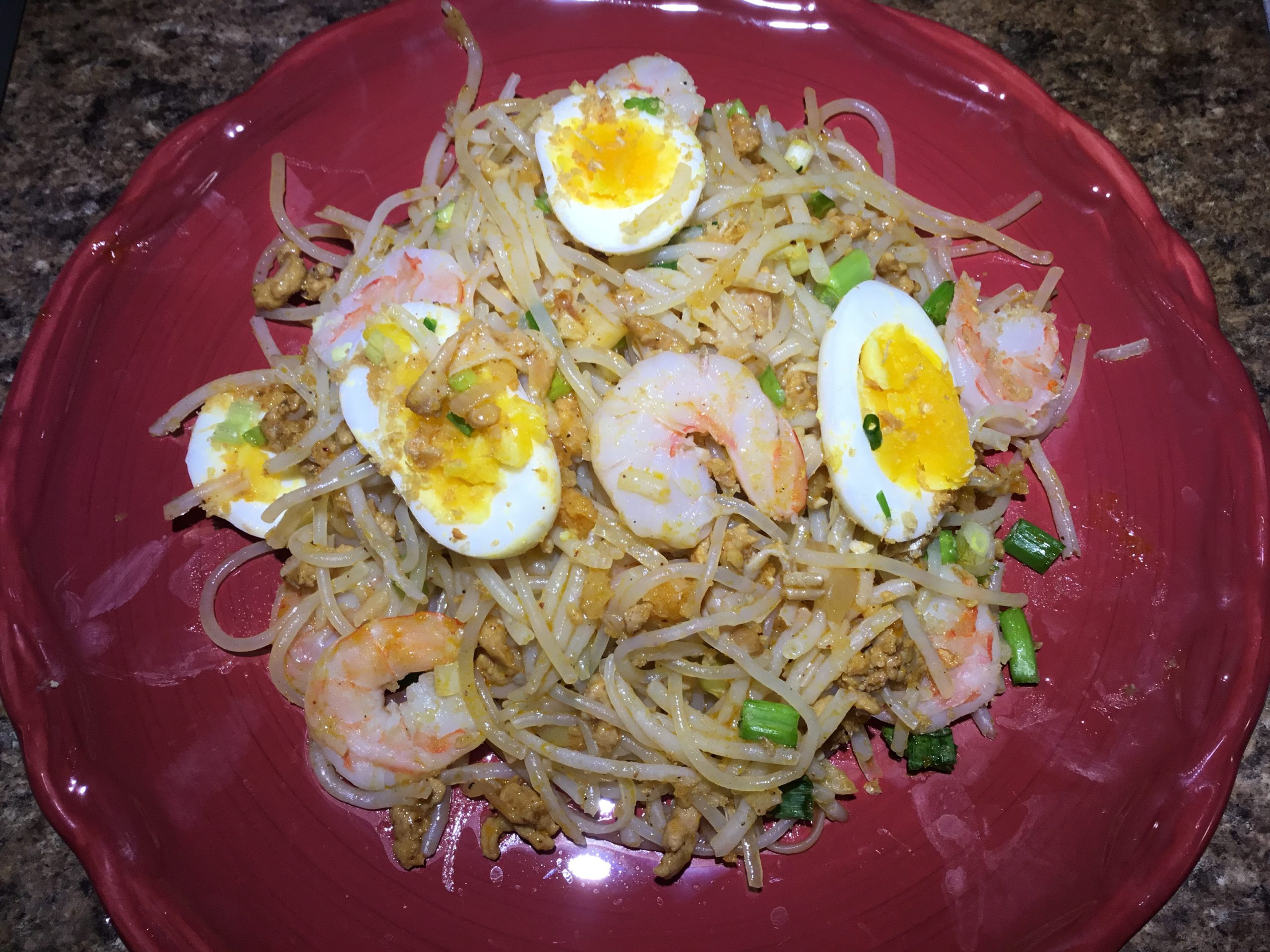
Pancit Luglug
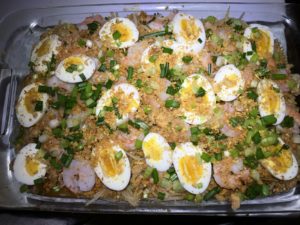
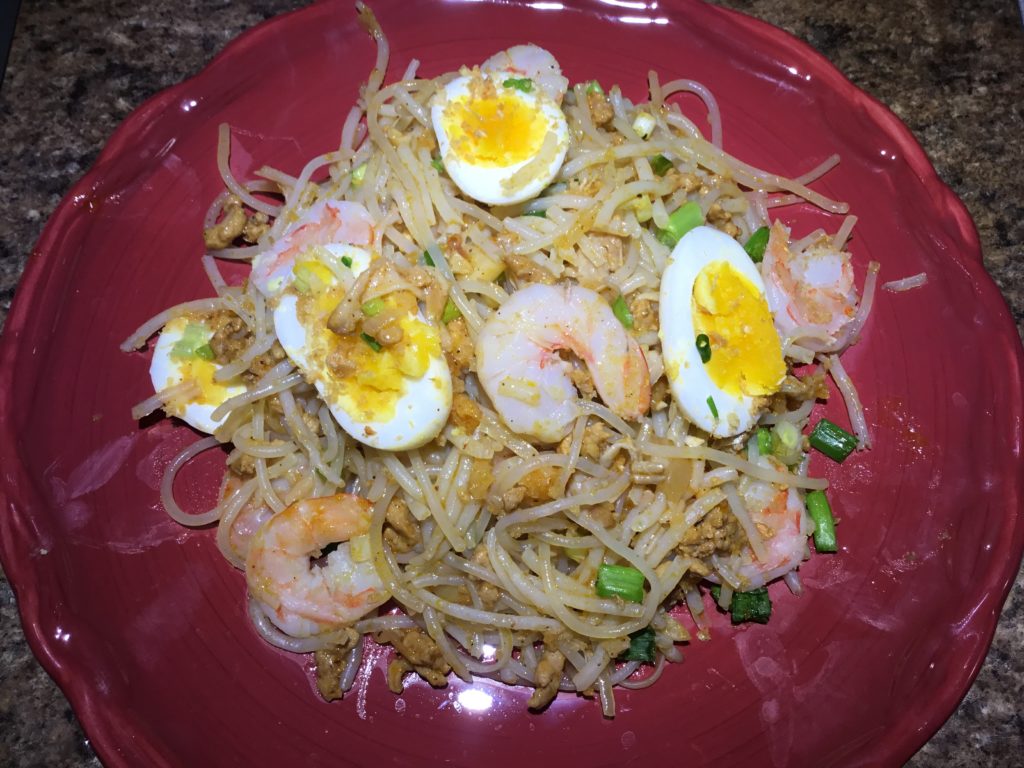
I’ll tell you…this dish is absolutely delicious. It has a beautiful presentation. But…it might be one of the biggest pains in the ass to make. There are a lot of ingredients. Multiple, multiple, multiple steps. But I promise that it pays off in the end.There are dozens of variations of pancit recipes. Pancit are a type of Filipino noodle made out of cornstarch instead of rice or wheat flour. The noodles are a little firmer then rice noodles. They come in different thicknesses. Luglug refers to a thick noodle; similar to a spaghetti noodle. The noodles are tossed in a pork and shrimp gravy, topped with shrimp, hard boiled eggs, crushed pork rinds, fried garlic, and green onions. Many different layers and textures to this dish.If you want to cut out some steps, you can use powdered shrimp stock. You don’t need to add the chicken chicharon. I happened to have chicken skin from a chicken tocino recipe I was making at the same time and wanted to add another layer of texture and flavor. But if you have a lot of time on your hands, this recipe is for you.
Ingredients
Shrimp Stock
- 4 cups water
- 3 cups shrimp shells
- 4 garlic cloves minced
- 3 small shallots diced
- 1 small carrot diced
- 1 stalk celery diced
- 2 bay leaves
Chicken Chicharon
- 8 oz chicken skin
- 1/2 tsp salt
- 1/2 tsp black pepper
- 1/2 tsp garlic powder
- 1/2 tsp onion powder
- 2 tsp vinegar
Pancit Luglug
- 1/2 lb 26/30 ct. shrimp
- 1 tbsp vegetable oil
- 1 medium onion diced
- 4 garlic cloves minced
- 1 lb ground pork
- 1 tbsp fish sauce
- 1 tbsp ground annatto powder
- 2 tsp pork bouillon
- 1 cup water
- 1/4 cup flour
- 16 oz Luglug noodles
- 1 cup pork rinds crushed
- 4 hard boiled eggs sliced
- 1/4 cup fried garlic bits
- 4 green onions chopped
Instructions
Chicken Chicharon
- Season the chicken skins with salt, pepper, garlic, and onion. Mix with 2 tsp of vinegar.
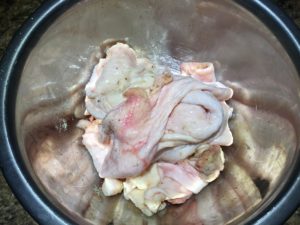
- Preheat the oven to 350 degrees. Lay the skins on a rack on a baking sheet lined in foil.
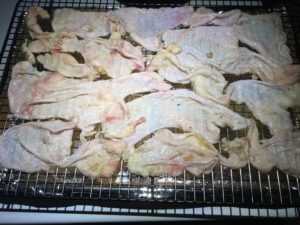
- Bake for 20 minutes until the skins become crispy.
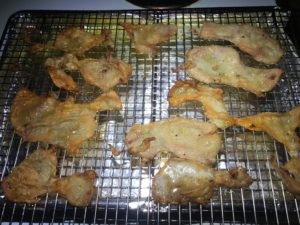
- Chop and set aside.
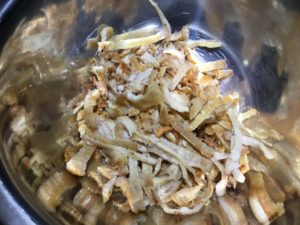
Shrimp Stock
- Bring 4 cups of water to a boil. Add in the shrimp shells and simmer for 10 minutes.
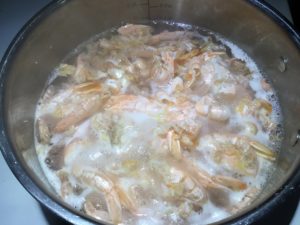
- Add in carrots, celery, shallots, garlic, and bay leaves. Continue simmering for 25 minutes.
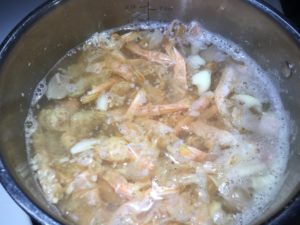
- Strain the stock, making sure to push down on the shrimp shells to extract all of the juices.
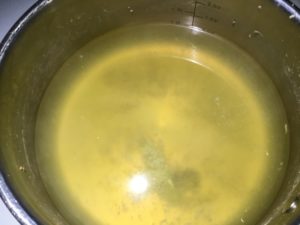
- Put the stock back into the pot over medium high heat. Poach the shrimp in the stock for 2 minutes.
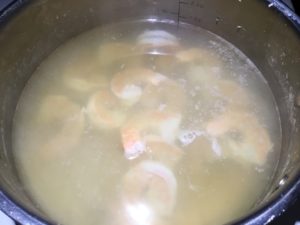
- Strain the stock again. Set both the shrimp and stock aside.
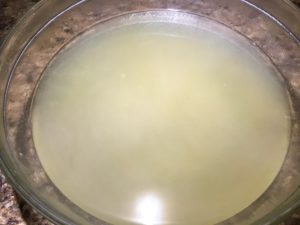
Pancit Luglug
- Prepare the Luglug noodles acco to the package directions.
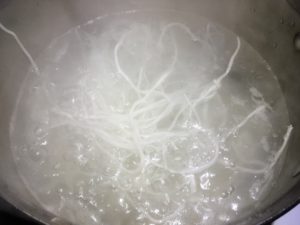
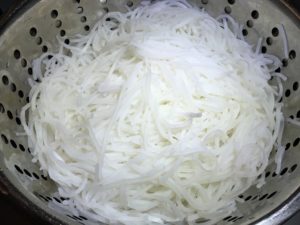
- Strain and rinse under cold water. Set aside.
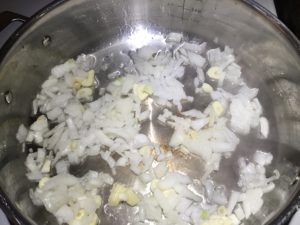
- Heat up cooking oil in a large pan over medium high heat. Sauté the onions and garlic for 2 minutes.
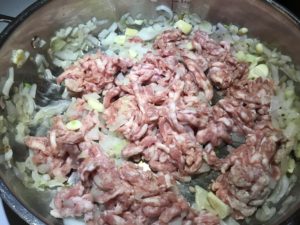
- Add in the ground pork, breaking up the clumps. Cook for 8 minutes, until the pork is browned.
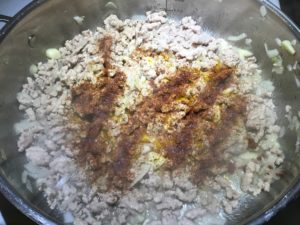
- Add in the fish sauce and ground annatto. Cook for 2 minutes.
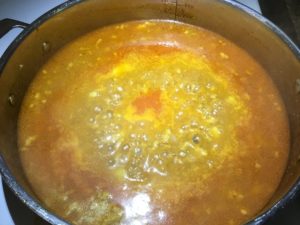
- Pour in the shrimp stock. Add 2 tsp of pork bouillon. Bring to a boil. Cover reduce the heat to medium and simmer for 10 minutes.
- Whisk together the flour and water.
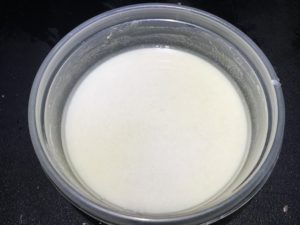
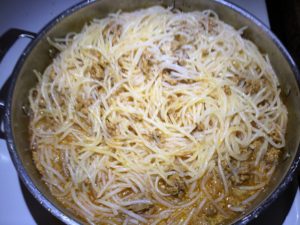
- Pour the slurry into the sauce. Whisk until it thickens. Add the noodles.
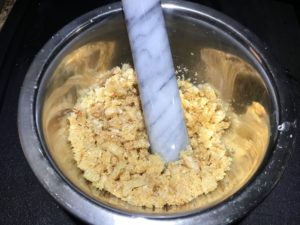
- Smash the pork rinds until they a finely ground.
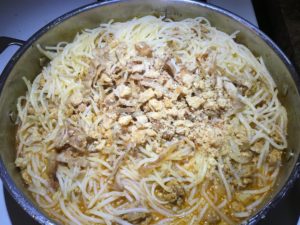
- Add all of the chicken chicharon and half of the crushed pork rinds.
- Place all of the noodles and sauce in a large baking dish or on a platter. Layer with the shrimp and sliced hard boiled eggs. Garnish with the other half of the crushed pork rinds, fried garlic bits, and green onions.
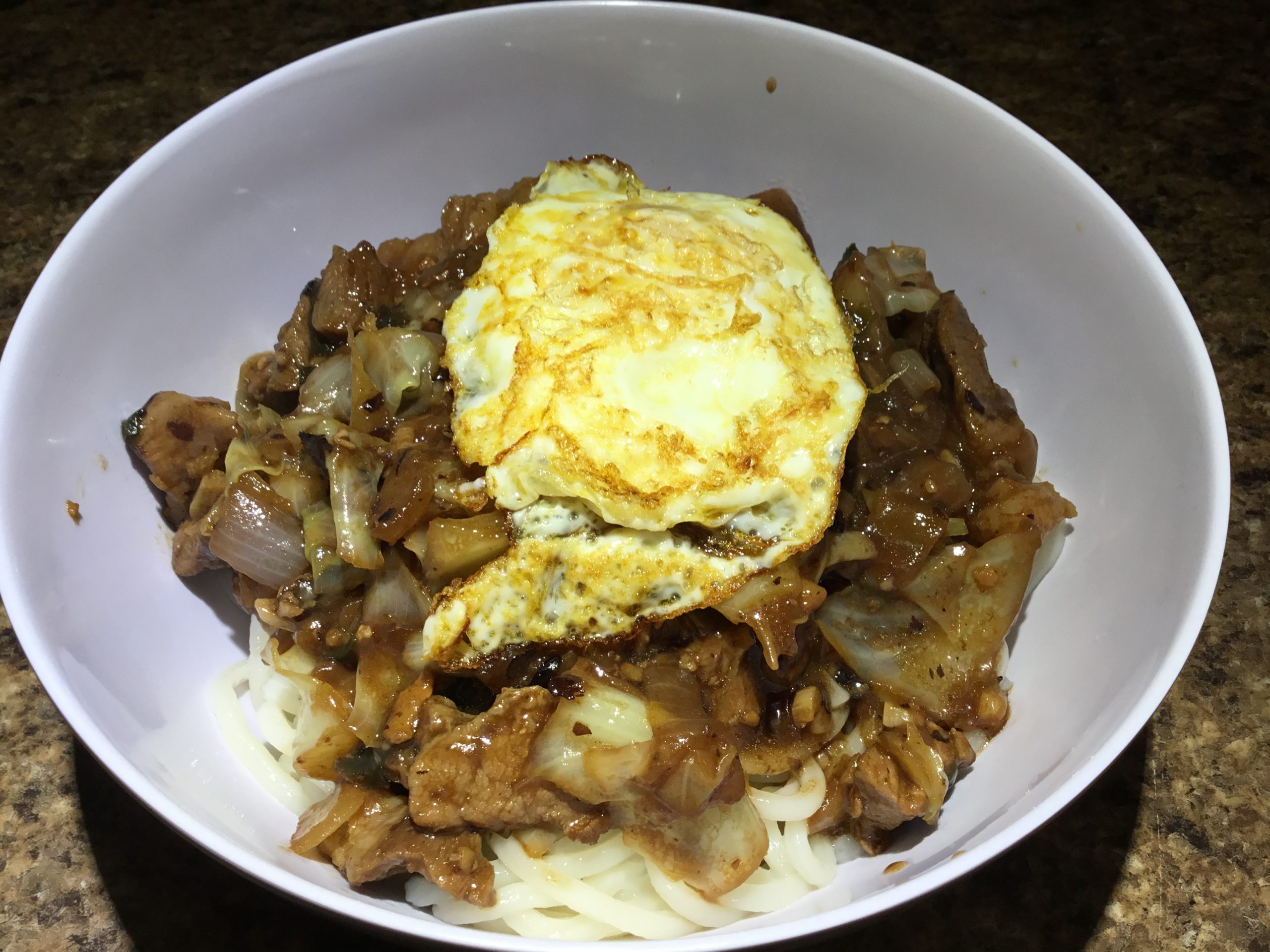
Jjajangmyun (Korean Noodles with Black Bean Sauce)
Jjajangmyun (Korean Noodles in Black Bean Sauce)
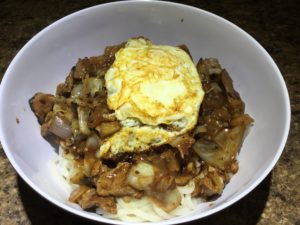
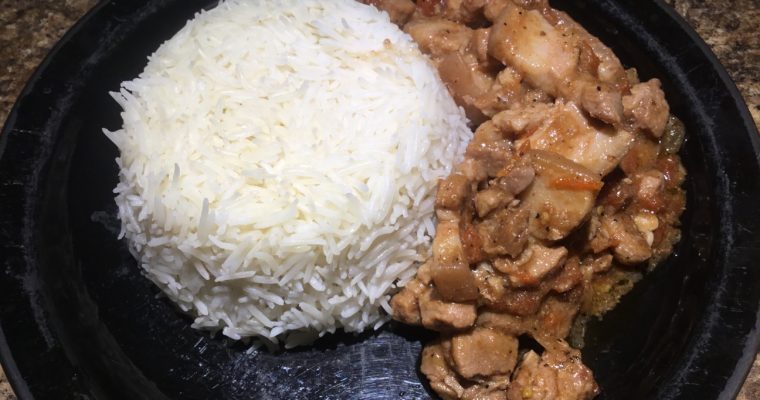
Jjajangmyun has its roots in Chinese cuisine. You may have seen it on Chinese menus as chicken in black bean sauce. The main difference between the Chinese and Korean versions is that the Korean jjajangmyun is typically sweeter due to the addition of sugar.So what is black bean paste? In Asian cuisine, black bean paste isn’t made from black beans, but fermented soy beans and carmel color. The Korean version of this paste is bitter and is sweetened with sugar. The paste is the essential ingredient in black bean garlic sauce, which is pretty much the base of jjajangmyun.Preparing jjajangmyun is fairly simple. You can use either pork or chicken for the protein. Pork shoulder and chicken thigh will work the best. A little bit of fat is necessary in this dish. Once the sauce is finished, it is ladled over Korean jjajang noodles. It is then topped off with a fried egg. If you don’t have noodles, you can put this over steamed rice; A.K.A. jjajangbap.
Ingredients
- 1 tbsp vegetable oil
- 1 lb pork shoulder 1” cubes
- 6 garlic cloves minced
- 3 green onions chopped
- 2 tbsp ginger minced
- 1/2 cup black bean paste
- 1 medium onion diced
- 1/4 head green cabbage chopped
- 1/3 cup rice wine
- 1 cup chicken stock
- 2 tbsp sugar
- 1 1/2 tbsp cornstarch dissolved in 4 tbsp of cold water
- 2 portions jjajang noodles
- fried eggs
Instructions
- Heat up cooking oil in a large sauté pan or wok over high heat. Sauté the pork shoulder for 3 minutes.
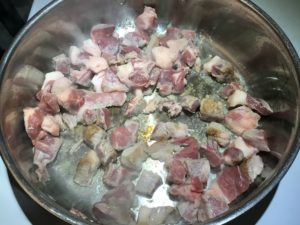
- Stir in the green onion, garlic, and ginger. Sauté for 2 minutes.
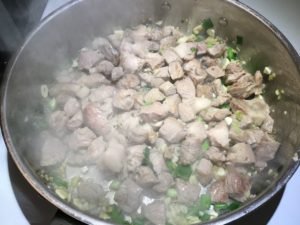
- Stir in the black bean paste. Cook for 1 minute.
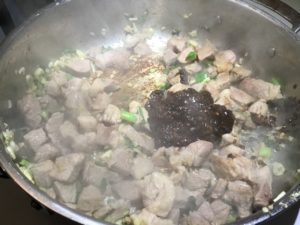
- Add in the cabbage and onions. Cook for 3 minutes.
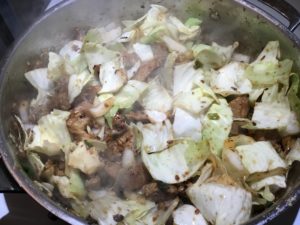
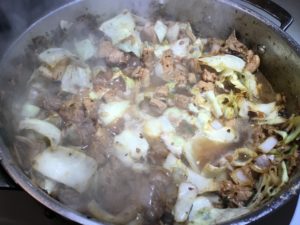
- Add in the cooking wine. Cook until the liquid has evaporated. Then add in the chicken stock and sugar. Bring to a boil. Reduce the heat to medium. Simmer uncovered for 15 minutes.
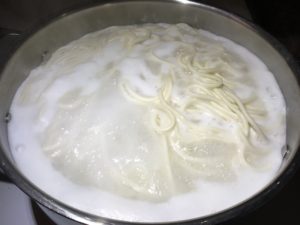
- While the pork and black bean sauce is simmering. Bring a pot of water to a boil. Add the jjajang noodles, boiling for 6-7 minutes. Drain and run under cold water.
- The last minute of cooking, stir in the slurry you made of cornstarch and water. This will thicken the sauce.
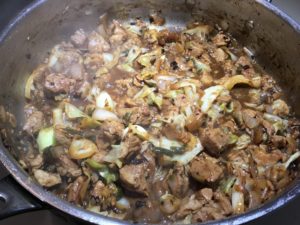
- Portion out the noodles and black bean sauce. Top with a fried egg.