Tag: eggs
Bandeja Paisa
Bandeja Paisa
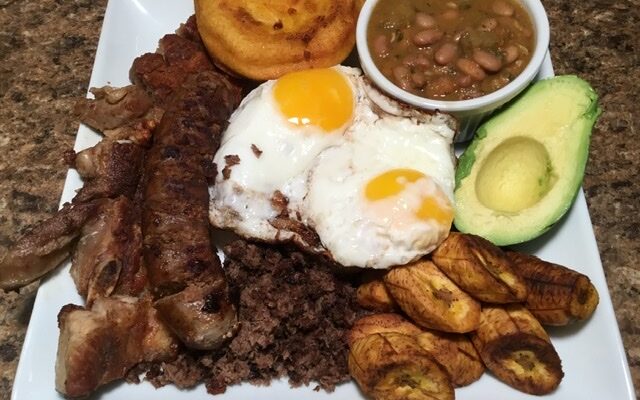
Bandeja paisa is the most popular dish in Colombia. It’s really more of a platter than a dish. This caloric feast consists of fried chicharon, chorizo, powdered beef, beans, rice topped with a fried egg, fried plantains, a cheese arepa, and sliced avocado. There’s no way around it, you don’t want to eat this very often. Once or twice a year tops. But when you are in the mood for this protein overload, prepare to work for this meal. Plan out a timeline for making all of the components. I recommend making the beans and powdered beef the day before.
Ingredients
- chicharron
- chorizo
- carne de pulvo
- white rice
- fried eggs
- Colombian beans
- cheese arepa
- fried plantains
- avocado sliced

Chicharrón Colombiano
Is there a greater gift to man than the belly of swine? The answer is no. No there isn’t. It is so great that we make the decision to fry this gift in it’s own rendered fat while naked, bathing in it’s crackling bukkake of lipidation. Oh yesss! Pinch that pork nipple.
Ingredients
- 1 lb skin on pork belly
- 1/2 tsp baking powder
- 1/4 tsp baking soda
- 1/2 tsp salt
- water enough to cover
Instructions
- Cut 1” cuts crosswise into the meat of a piece of pork belly, but not into the skin. Rub with baking powder, baking soda, and salt.

- Add the pork belly to a large sauté pan. Add enough water to cover the belly. Bring to a boil. Reduce the heat to medium. Cook until all of the water has evaporated.

- Cook the pork belly for 15-20 minutes depending on thickness. Flip the pork belly every couple of minutes to get even browning. The pork will render out plenty of fat, so no oil or lard required.

Argentinian Chorizo
When we talk about chorizo in South American countries like Argentina, Chile, Uruguay, Peru, etc., it couldn’t be more different than Mexican chorizo. Argentinian chorizo usually has a 2 to 1 ratio of pork and beef. It is seasoned with salt, pepper, paprika, and fresh garlic. Red wine is also a major flavor component to the sausage. It is also a raw chorizo, as opposed to the dried Spanish chorizo.
Equipment
- standing mixer
- sausage stuffer
Ingredients
- 3 lbs ground pork
- 1 lb ground beef
- 1 1/2 tbsp salt
- 3 tsp black pepper
- 2 tbsp paprika
- 5 garlic cloves minced
- 1 cup red wine
- hog casings
Instructions
- Add all of the ingredients to a standing mixer.

- Mix with the paddle attachment on low speed for 2 minutes until all of the ingredients are homogeneous. Place the sausage in the refrigerator for an hour before stuffing.

- Pipe the sausage through a stuffer into the hog casings. Twist to 6” each link.

- Let rest for a couple hours in the refrigerator before cutting.

Cooking the Sausage
- Heat up a tbsp of cooking oil in a sauté pan over medium high heat. Add in the sausages. Cook for 5 minutes a side.

- Make 5-6 slits half way into the sausage. Cook for a couple more minutes.

Powdered Beef (Carne en Polvo)
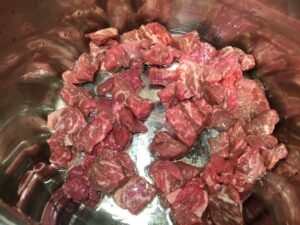
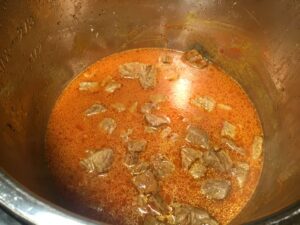
Powdered beef is commonly eaten in Colombia as part of a bandeja paisa platter. Flank steak gets marinated, boiled, then pulverized in a food processor until it resembles a powdered form. Carne en polvo is great for little kids who might have a problem chewing pieces of steak. Not me. I was consuming meat at 6 months old like a champion.
Equipment
- food processor
Ingredients
- 1 lb flank steak
- 5 cups watet
- 3 garlic cloves minced
- 2 green onions chopped
- 1/2 cup white onion chopped
- 1/2 tsp ground cumin
- salt and pepper to taste
Instructions
- Place the flank steak in a storage bag with the garlic, green onions, white onions, cumin, salt, and pepper. Marinate for 24 hours.

- Put the flank steak in a pot of water.

- Bring to a boil, then reduce the heat to medium low. Simmer for an hour.

- Strain the meat. Let cool.

- Cut up the flank into chunks and place in a food processor.

- Process until it is finely shredded.

Frijoles Antioquenos
Frijoles antioquenos is a Colombian bean soup that’s bursting with flavor. Pinto or cranberry beans are simmered with pork hocks, plantains, and carrots. After simmering, the carrots are scooped out, puréed in a food processor, then stirred back into the soup to thicken. But the main source of the flavor of this soup comes from the alinos and hogao sauce, which I’ve attached the recipes for below.
Equipment
- food processor
Ingredients
- 1 lb dried pinto beans soaked overnight
- 3 smoked pork hocks
- 1 plantain cubed
- 2 large carrots each cut into 3 pieces
- 1/2 cup alinos sauce
- 1 tsp ground cumin
- 9 cups water
- 1/2 cup cilantro chopped
- 1 cup hogao sauce
- salt and pepper to taste
Instructions
- Add the beans and smoked hocks to a pot of water. Bring to a boil, then reduce the heat medium low and simmer for 20 minutes.

- Stir in the cumin, alinos, carrots, and plantains. Simmer for 1 hour.

- Add in the hogao, cilantro, salt and pepper. Continue simmering for 30 minutes.

- Scoop out the carrots along with 1 cup of the bean broth.

- Purée until smooth.

- Add the purée back into the beans. Scoop out the hocks. Cut off any meat and return to the pot. Simmer for 10 more minutes.

Arepas de Rellenos Queso
Arepas de rellenos queso is stuffed with mozzarella cheese and is fried for an extra 2 minutes a side, allowing the cheese to melt. Top it off with a little hogao sauce and cilantro. This is similar to a grilled cheese.
Ingredients
- 1 arepa corn cake
- 2 slices mozzerella
- 2 tbsp hogao sauce
- cilantro chopped
Instructions
- Cut your arepa in half; like you would an english muffin.

- Put 2 slices of mozzarella inside.

- Add it back into the pan. Cook for another 2 minutes a side until the cheese is melted.

- Top with hogao sauce and cilantro.

Ugandan Rolex
Ugandan Rolex
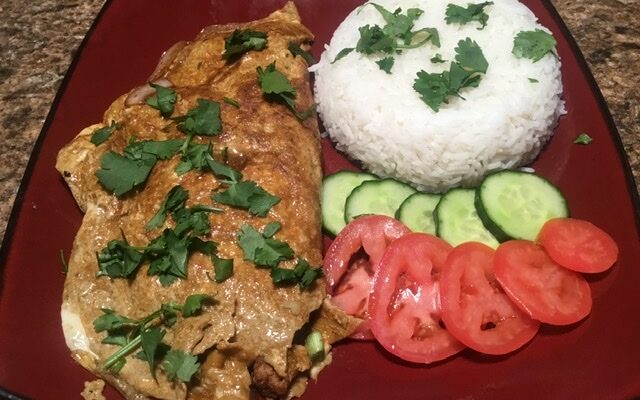
This is the first recipe from Uganda on stonedsoup.net! The Ugandan Rolex is a popular breakfast egg wrap found at street corner food stalls. It is an omelette with cabbage, tomato, onion, and hot peppers rolled up in chapati. The story of how this wrap got it’s name comes from vendors calling out the order “rolled eggs” when it is finished cooking. Somehow, but not surprising, foreign visitors misinterpreted “rolled eggs” for “Rolex”; and the joke stuck.
Ingredients
- 2 large eggs beaten
- 1/4 cup cabbage shredded
- 1/4 cup tomato finely chopped
- 1 tbsp red onion finely chopped
- 1 tbsp serrano pepper finely chopped
- salt to taste
- 1 tbsp vegetable oil
- 2 chapati
Instructions
- Heat up half of the cooking oil in a sauté pan over medium high heat. Cook the chapati for 3 minutes a side. Set aside.

- Mix together the rest of the ingredients.

- Heat up the rest of the cooking oil. Pour half of the egg mixture in the sauté pan.

- Let the egg mixture set for a couple of minutes. Then flip it over and cook for a few more.

- Place each of the omelettes on top of the chapati.


Kimbap
Kimbap
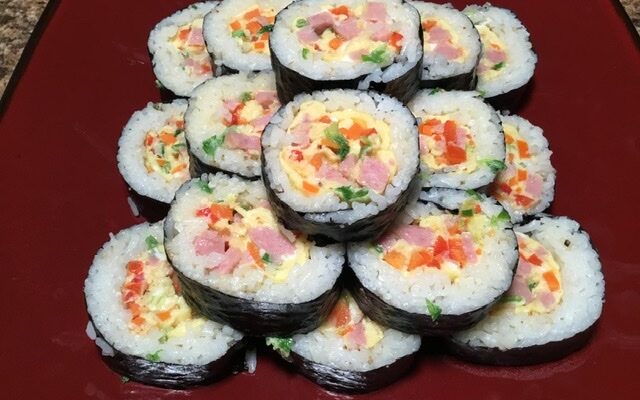
Kimbap is one of the most popular foods in Korea. Resembling sushi, these rice rolls of multi layered complexity are fairly time consuming to make, but are very addicting. Each of the ingredients have a few steps in preparation. The classic ingredients in kimbap are beef, carrots, fish cakes, pickled radish, spinach, and julienned omelette; rolled in nori with steamed rice seasoned with sesame oil. These are best eaten the day they are made, but can be slightly warmed up in the microwave. Since there is so much going on with kimbap, they are served without sauce.
Equipment
- sushi rolling mat
- serrated knife
Ingredients
Rice
- 3 cups steamed short grain rice
- 1 tbsp sesame oil
- 1 tsp salt
Beef
- 8 oz ground beef or thinly julienned sirloin
- 1 tbsp soy sauce
- 1 tsp rice wine
- 1 tsp sugar
- 1 tsp sesame oil
- 1 garlic clove minced
Fish Cakes
- 1 sheet fish cake cut into 3/4” strips
- 1 tsp soy sauce
- 1/2 tsp sesame oil
- 1/2 tsp sugar
Spinach
- 8 oz baby spinach
- 1 tsp sesame oil
- 1/4 tsp salt
Eggs
- 2 large eggs beaten
- 1/4 tsp salt
- 1/2 tsp vegetable oil
Carrots
- 1 large carrots julienned
- 1 tsp vegetable oil
- 1/4 tsp salt
Other Ingredients
- 4 strips pickled radish
- 4 sheets nori
Instructions
Ingredient Prep
- Brown the beef in a sauté pan over medium high heat.

- Season with soy sauce, rice wine, sugar, sesame oil, and garlic. Cook for 1 minute. Set aside.

- Bring a pot of water to a boil. Blanch the spinach for 1 minute.

- Shock in an ice bath to stop the cooking. Squeeze out the water. Season with sesame oil and salt. Set aside.

- Heat up vegetable oil in a small sauté pan over medium high heat. Sauté the carrots for 2 minutes. Season with salt. Set aside.

- Add cooking oil to the pan. Pour in the beaten eggs.

- Cook for 1 minute a side. Cut into 3/4” thick strips. Set aside.

- Add cooking oil to the pan. Add in the fish cakes. Season with soy sauce, sesame oil, and sugar. Sauté for 2 minutes. Set aside.

- Finally, stir in the sesame oil and salt to the steamed rice. Let cool slightly.

Kimbap Assembly
- Gather all of the kimbap ingredients together.

- Lay a sheet of nori on a bamboo sushi rolling mat; shiny side down. Place 3/4 cup of the rice in a thin layer on the nori sheet.

- Leave a 1/2” of rice uncovered across the bottom of the sheet. Then place thin layers of each ingredient starting from the bottom in the specific order: beef, carrots, fish cakes, pickled radish, and egg. You should use no more than 2/3 of the sheet to layer your ingredients, with the top 1/3 just rice. It is very important to not overstuff the nori.

- Using the bottom of the rolling mat, roll over the top. Press it tightly.

- Unroll the mat. Bring the roll back to the bottom and roll it tightly again, making sur the bottom is sealed.

- Using a serrated knife, slice 1” thick pieces of the kimbap roll.