Tag: pork
Adobo sa Gata

Adobo sa Gata
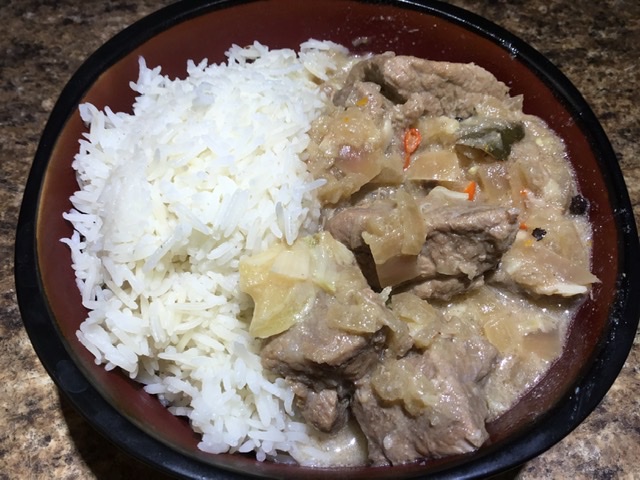
Adobo sa gata is pork braised in vinegar, soy sauce, and coconut milk with heavy amounts of garlic and a little heat from bird’s eye chilies. You can use either pork shoulder or pork belly, depending on how fatty you like your meat. The adobo is best served with heaping piles of steamed rice.
Ingredients
- 3 lbs pork shoulder cut into 2” cubes
- 1 medium onion thinly sliced
- 1 head garlic peeled
- 1/2 tsp black peppercorns
- 2 bay leaves
- 1 cup water
- 1/2 cup vinegar
- 1/4 cup soy sauce
- 1 tbsp vegetable oil
- 1 cup coconut milk
- 3 bird’s eye chilies finely chopped
- salt to taste
Instructions
- Place the pork, onions, garlic, water, vinegar, soy sauce, black peppercorns, and bay leaves in a large pot. Bring to a boil over medium high heat. Cover. Reduce the heat to medium low and simmer for 45 minutes.
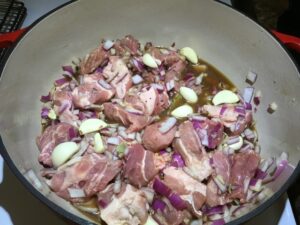
- Strain the liquid from all the ingredients in the pot. Save 1 cup of the braising liquid.
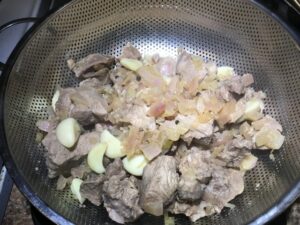
- In the same pot over medium high heat, add the vegetable oil. Sauté the strained ingredients for 10 minutes.
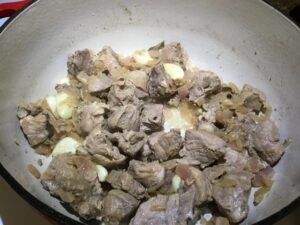
- Pour in the reserved braising liquid, coconut milk, and chilies.

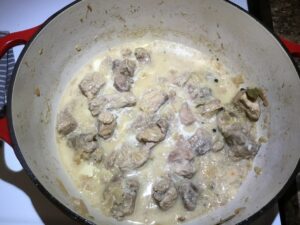
- Braise for 20 minutes. Season with salt to taste.
Pork Tonkatsu Ramen

Pork Tonkatsu Ramen
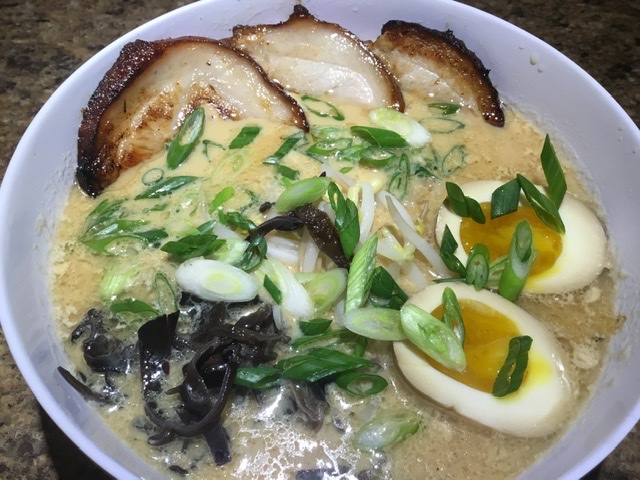
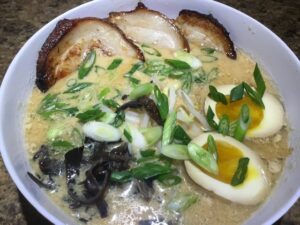
Pork tonkatsu ramen is my favorite of all the ramen varieties. It is known for it’s creamy rich white broth and slices of chasu pork that dwell inside of this bowl of perfection. The ramen is also topped with a ramen egg, bean sprouts, black fungus, and lots of green onions. If you want to go all out with your ramen like in this recipe, you are going to have to plan out 2 days to really make this ramen right. Making the chasu pork and the ramen egg is a 2 day process; both of which are included at the bottom of the recipe. The rest of the ramen ingredients and assembly will only take 25 minutes to prepare.
Ingredients
Broth
- 2 cups chicken stock
- 2 cups dashi
- 2 cups unsweetened soy milk or cashew, almond, or oat milk
- 1/4 cup lard
Tonkatsu Ramen
- 1 portion ramen noodles
- 3 tbsp tare sauce
- 1 green onion chopped
- 1/2 cup bean sprouts
- 3 dried black fungus rehydrated
- 3 slices chasu pork
- 1 ramen egg sliced in half
Instructions
Broth
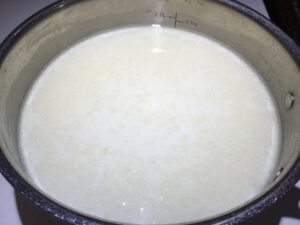
- Bring the chicken stock and lard to a boil.
- Add in the dashi and soy milk. Bring to a simmer over medium heat.
Prepping Tonkatsu Ramen Ingredients
- Bring a pot of water to boil. Blanch the black fungus for 1 minute. Scoop out and set aside.

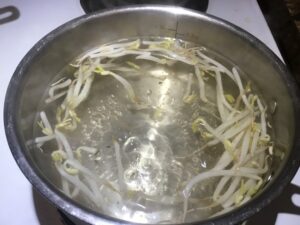
- Blanch the bean sprouts for 1 minute. Set aside.
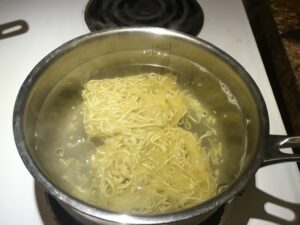
- Place the ramen noodles into the boiling water and cook according to the package directions. Set aside.
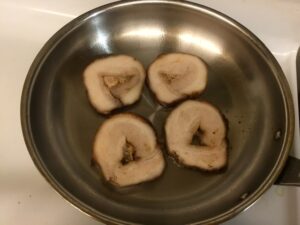
- Thinly slice a few pieces of the chasu pork.

- Sear the pork in a sauté pan for a minute a side over high heat. Set aside.
Tonkatsu Ramen Assembly
- Place the tare sauce in the bottom of a large ramen bowl.
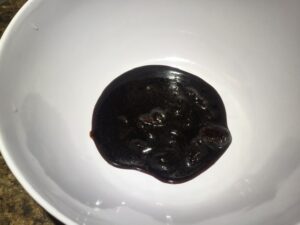
- Ladle 1 1/2 cups of the broth into the bowl.
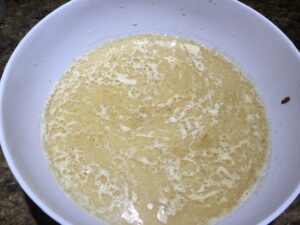
- Add the noodles and toss in the broth.
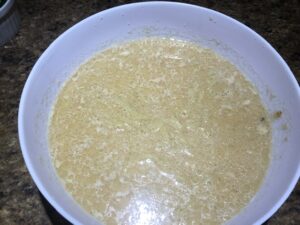
- Top with the chasu pork, ramen egg, black fungus, bean spouts, and green onions.

Ramen Chasu Pork
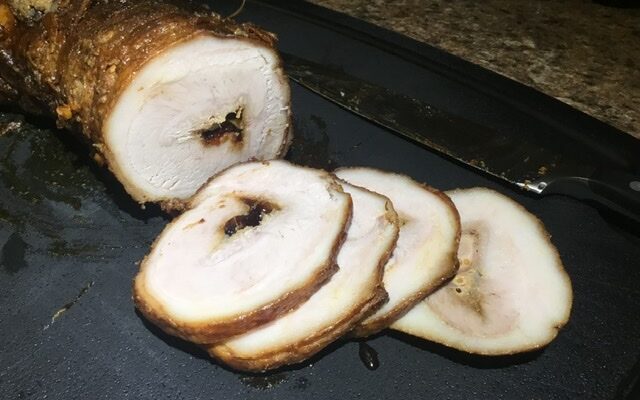
Tonkatsu ramen is my absolute favorite of all the varieties of ramen that are out there. The pork belly is my favorite part of the tonkatsu. The outer skin is crispy while the center of the pork belly rainbow is butter tender. Yes, my butter is tender.While there are many steps to make the chasu pork, it is still fairly easy to make. You can use skin-on or skinless pork belly. There is no wrong. I was only able to get skinless, so that’s what we’re going with. You will need at least a 4lb piece of pork belly. It does sound like a lot, but it is going to shrink almost by half after the braising. Place the belly fat side down and roll it up tight. Using butcher’s twine, tie the very center of the roll to hold it in place. Then tie 4 more ties around the belly on each side of the center tie; about every 1” or so.To cook the pork belly, sear it on all sides in a large Dutch oven. Pour in soy sauce, mirin, sake, sugar, ginger, garlic, and green onions. Bring it to a boil, uncovered. Then place a cover on the pot. Simmer for 90 minutes, turning the belly every 20 minutes to evenly flavor the chasu pork. Reduce the heat to medium low and simmer for an additional 30 minutes. Remove the belly from the pot. Let cool completely. Strain out the ginger, garlic, and green onions from the sauce and discard. Place the chasu pork in a gallon sized storage bag with 1 cup of the strained sauce. Refrigerate for 1 day before slicing. This step can not be skipped. This will allow the pork to keep it’s shape when sliced. Use the rest of the sauce as the tare sauce for your ramen. Tare sauce adds another dimension of flavor to your tonkatsu ramen.Chasu pork is also great to use in gua bao pork buns.
Equipment
- Butchers Twine
Ingredients
- 4 lb pork belly
- 1 cup sugar
- 1 1/2 cups soy sauce
- 1 1/2 cups mirin
- 1 1/2 cups sake
- 1/4 lb ginger sliced in half
- 2 heads garlic sliced in half
- 6 green onions
- 1 tbsp vegetable oil
Instructions
- Place your pork belly skin side down on a cutting board.
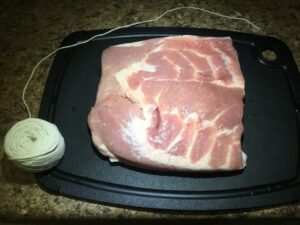
- Roll up your pork belly tight. Using butcher’s twine, tie up the pork belly in the very center of the roll.
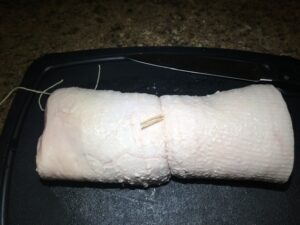
- Tie up the pork belly every inch or so; at least 4 times on each side of the center tie.
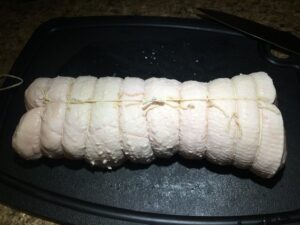
- Heat up the cooking oil in a Dutch oven over medium high heat. Brown the tied up pork belly on all sides for 10-12 minutes in total.
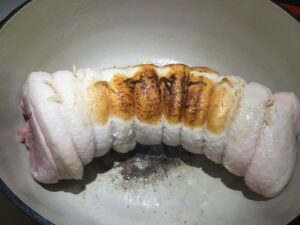
- Mix together the sugar, soy sauce, mirin, and sake. Pour into the Dutch oven. Add in the ginger, garlic, and green onions. Bring to a boil uncovered.
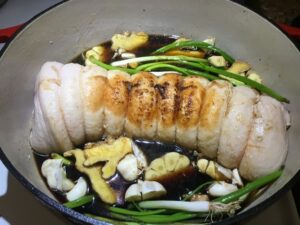
- Place a cover on the Dutch oven. Simmer for 90 minutes, turning every 20 minutes in the sauce.
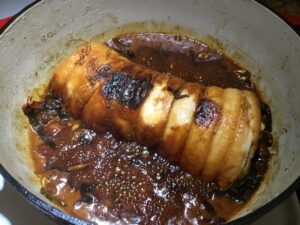
- Refuce the heat to medium low and continue simmering for 30 more minutes.
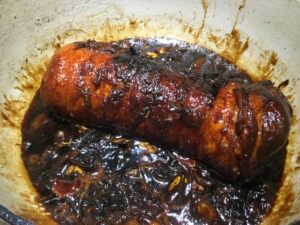
- Take the pork belly out of the pot and let cool.
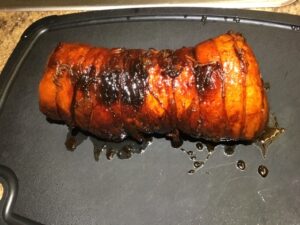
- Strain the sauce of the ginger, garlic, and green onions.
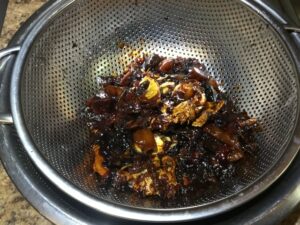
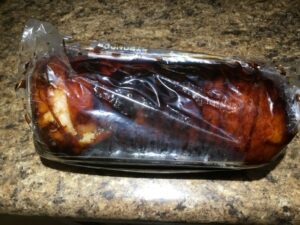
- Place the pork belly in a gallon sized storage bag with 1 cup of the strained sauce. Place in the refrigerator for 24 hours before use.
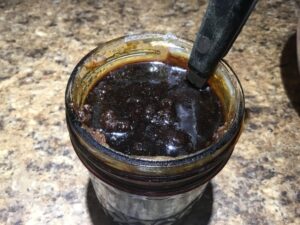
- Save the rest of the sauce. This is now the tare sauce for the ramen.
Ramen Egg
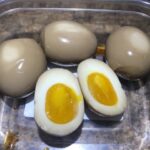
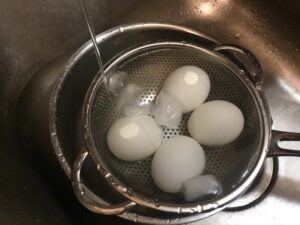
Every bowl of ramen requires a nice marinated ramen egg. They couldn’t be easier to make. There really isn’t any wrong to how done you want the yolks in your egg. They can be cooked all the way through, or slightly runny. It is all about the marinade. Bring a pot of water to a boil. Drop in the eggs. Cover. Turn off the heat. For a runny yolk, let sit for 7 minutes. For more of a hard boiled yolk, let sit for 9 minutes. Shock in an ice bath, then peel the eggs. The eggs will marinate in a mix of soy sauce, mirin, sake, and white pepper for an absolute minimum of 4 hours. Letting your eggs marinate for at least a day will give the eggs a stronger flavor, which is really what you want. You can even marinate the eggs for up to 2 days. When ready to serve in your ramen, slice in half and place on top of your bowl.
Ingredients
- 4 large eggs
- 3 tbsp soy sauce
- 2 tbsp mirin
- 1 tbsp sake
- pinch white pepper
Instructions
- Bring a pot of water to a boil. Carefully drop in the eggs. Place a cover on the pot. Let sit for 7 minutes.

- Shock the eggs in an ice water bath. Let completely cool for 10 minutes.
- Mix together the soy sauce, mirin, sake, and white pepper.

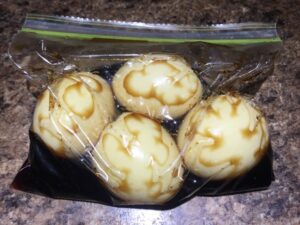
- Peel the eggs. Marinate the eggs in a ziplock bag for 1 day. Casually flip the bag every few hours throughout the day.
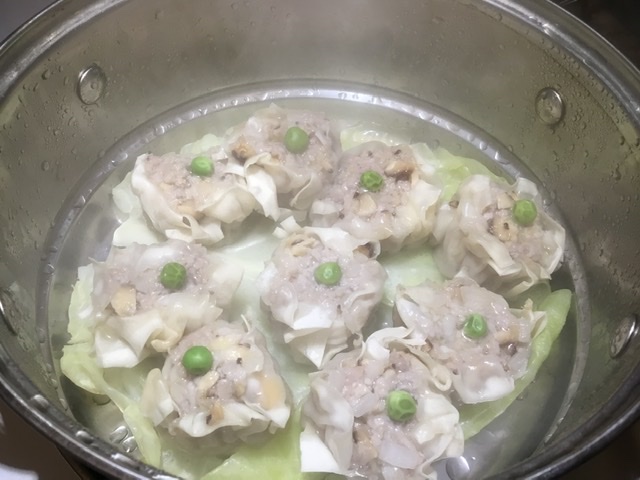
Pork Shumai

Pork Shumai
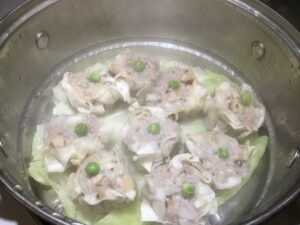
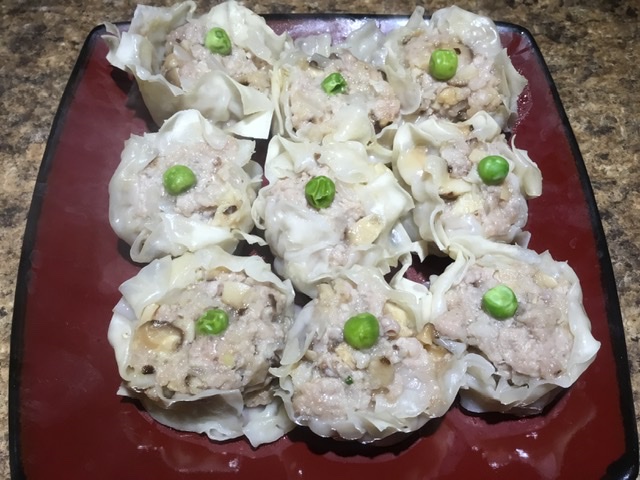
Shumai, like gyoza, originated from Chinese cuisine. Shumai are kind of an open-faced dumpling filled with ground pork and are then steamed. The ingredients in Chinese and Japanese Shumai are very similar. The one simple thing that stands out in Japanese shumai is that they place a single pea in the center; more so for presentation and not flavor.
Equipment
- steamer
Ingredients
- 3/4 lb ground pork
- 1/2 small onion
- 3 dried shiitake mushrooms rehydrated
- 1 tsp ginger grated
- 3 tbsp cornstarch
- 1/2 tbsp soy sauce
- 1 tbsp sake
- 1 tbsp sesame oil
- 1/2 tsp sugar
- 1/2 tsp salt
- 1/4 tsp white pepper
- peas
- wonton wrappers
- 2 cabbage leaves for the steamer
Instructions
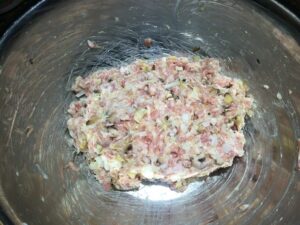
- Mix together the ground pork, onion, mushrooms, soy sauce, sesame oil, sake, ginger, cornstarch, salt, sugar, and white pepper.
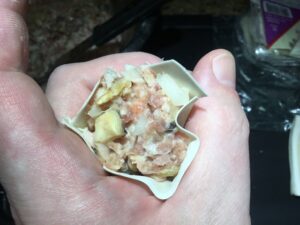
- Take a wonton wrapper and stuff it with a heaping tbsp of the filling. Gently form it into a barrel shape.
- Place a single pea in the center of the shumai.

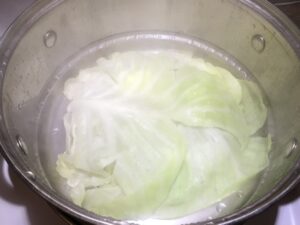
- Bring water to a boil in a steamer pot. Line the steamer with a couple of cabbage leaves.
- Place the shumai in the steamer and place the cover on.

- Steam for 10 minutes.