Tag: main course
Tamagoyaki
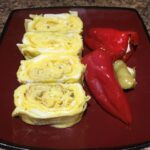
Tamagoyaki
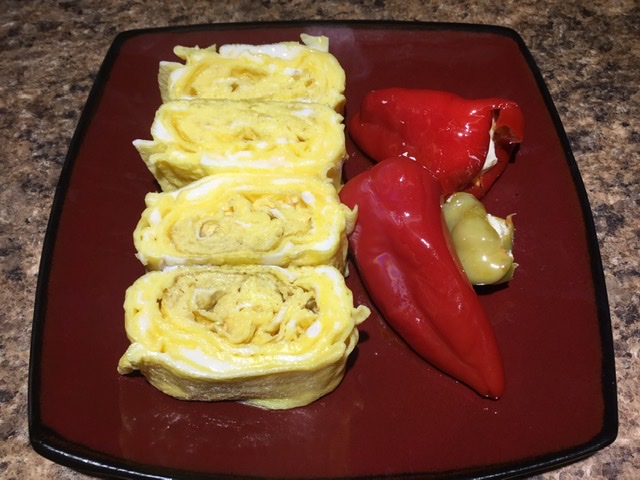
Tamagoyaki literally means “grilled egg” in Japanese. You will typically see tamagoyaki served for breakfast, as a side dish, in bento boxes, and even in sushi as nigiri, wrapped with nori on top of sushi rice. In Japan, customers dining in at a sushi restaurant will order tamago nigiri first to asses the chef’s sushi making skills.Tamagoyaki consists of eggs, mirin, soy sauce, and sugar cooked on a special omelette griddle called a yakimakinabe. The griddle has high edges, with one side flat and the other rounded. Small amounts of the egg mixture is cooked, then rolled to the flat side of the griddle. The omelette is pushed to the rounded side of the griddle and more of the egg mixture is poured in. Once the eggs set, the egg roll is rolled over the set eggs. These steps are repeated until all of the egg mixture is used up and you’re left with a thick omelette roll. The omelette is then sliced into 4 pieces.
Equipment
- tamagoyaki griddle
Ingredients
- 4 large eggs beaten
- 1 tbsp mirin
- 1 tbsp soy sauce
- 1 tbsp sugar
- 1 pinch salt
- vegetable oil
Instructions
- Whisk together the eggs, mirin, soy sauce, sugar, and salt.
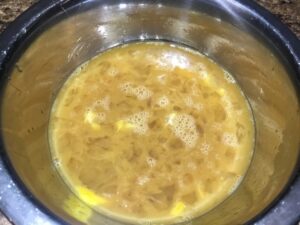
- Lightly grease your tamagoyaki griddle with 1 tsp of vegetable oil over medium heat. Pour in 1/4 cup of the egg mixture and let set for a minute.
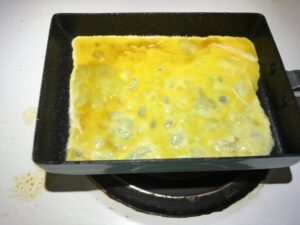
- Gently push the eggs to the flat side of the griddle. Your first ladle of the eggs doesn’t need to be rolled perfectly.
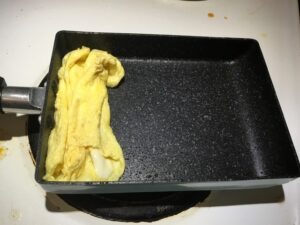
- Push the egg to the rounded side of the griddle. Pour in another 1/4 cup of the egg mixture. Let it set for 30 seconds.
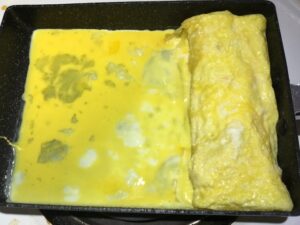
- Roll the omelette over to the flat side of the griddle. Push the omelette to the rounded side of the griddle.
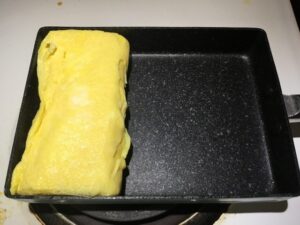
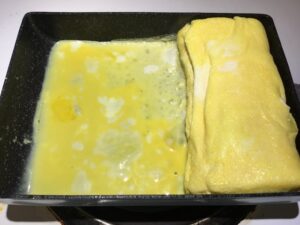
- Repeat the steps until all of the egg mixture is used up. You should get somewhere between 4-6 rolls during the entire cooking process.
Onigiri

Onigiri
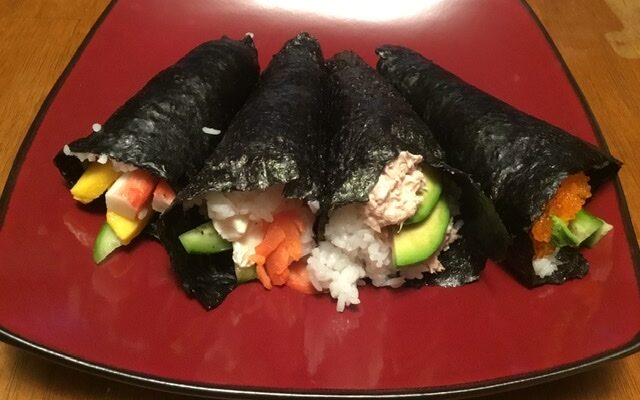
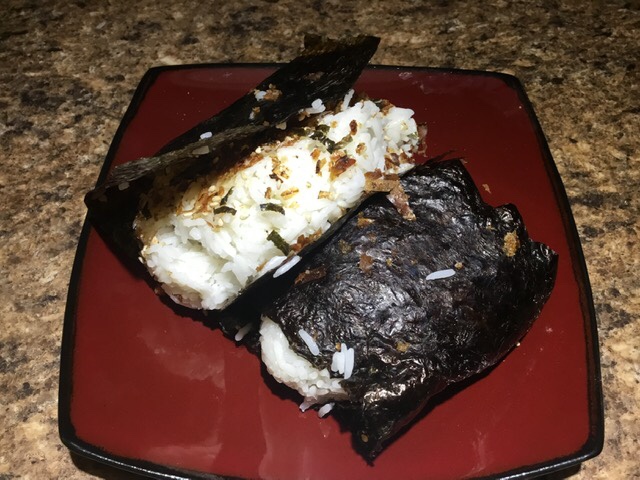
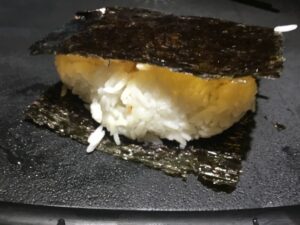
Onigiri is kind of like a rice ball sandwich. They are extremely popular in Japan. They are commonly found in bento boxes and make the perfect on the go meal or snack. Onigiri couldn’t be easier to make. Make some steamed rice. Let the rice cool enough so you can handle it. Wet your hands with water. Sprinkle a little salt into the palm of your hand. Take a half cup of steamed rice and form into a round triangular shape. Make a hole in the center. Fill it with mixed bonito flakes and soy sauce. Close it up and place on a half sheet of nori. Sprinkle some furikake on top and fold the nori sheet over. Other fillings that you can stuff your onigiri with include smoked salmon, red bean paste; even fried chicken.
Ingredients
- 1 cup steamed rice warm, but cool enough to touch
- salt
- 2 tbsp bonito flakes
- 1 tsp soy sauce
- nori
- furikake
Instructions
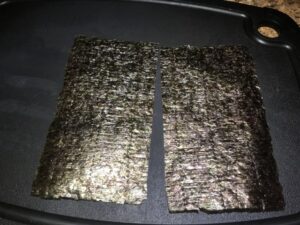
- Cut a sheet of nori in half.
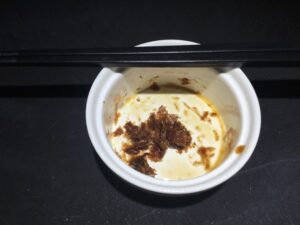
- Mix together the bonito flakes and soy sauce.
- Wet your hands with water. Pour a little less than a 1/4 tsp of salt in the palm of your hand. Shape a 1/2 cup of the steamed rice into a rounded triangular shape.
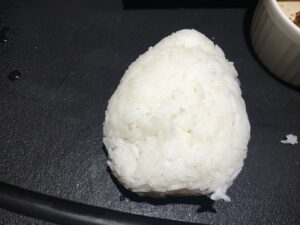
- Make a hole with your ginger in the center og the rice ball. Place half of the bonito/soy sauce mix in the hole and close up.
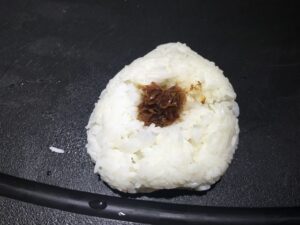
- Place the rice ball on one end of the nori.
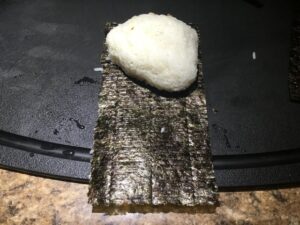
- Sprinkle with furikake.
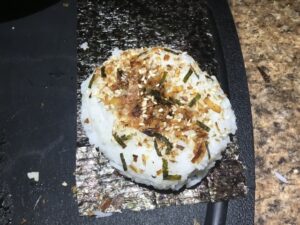
- Fold the nori over.5
Ramen Chasu Pork

Ramen Chasu Pork
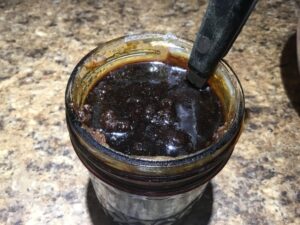
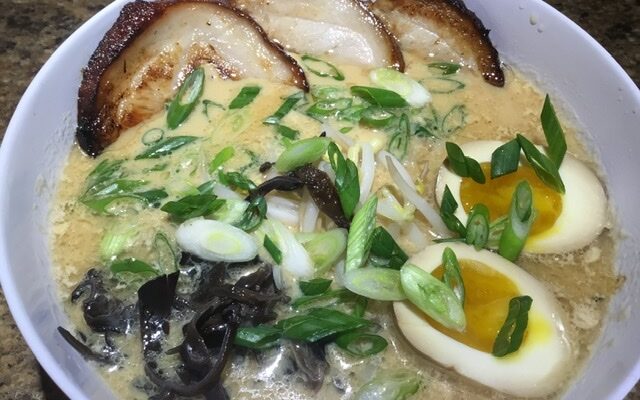
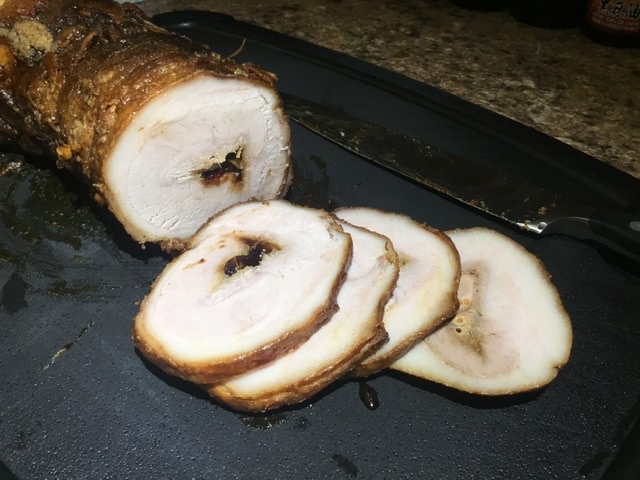
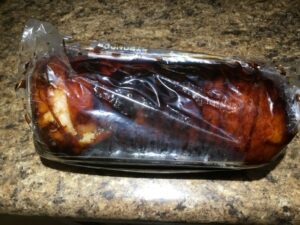
Tonkatsu ramen is my absolute favorite of all the varieties of ramen that are out there. The pork belly is my favorite part of the tonkatsu. The outer skin is crispy while the center of the pork belly rainbow is butter tender. Yes, my butter is tender.While there are many steps to make the chasu pork, it is still fairly easy to make. You can use skin-on or skinless pork belly. There is no wrong. I was only able to get skinless, so that’s what we’re going with. You will need at least a 4lb piece of pork belly. It does sound like a lot, but it is going to shrink almost by half after the braising. Place the belly fat side down and roll it up tight. Using butcher’s twine, tie the very center of the roll to hold it in place. Then tie 4 more ties around the belly on each side of the center tie; about every 1” or so.To cook the pork belly, sear it on all sides in a large Dutch oven. Pour in soy sauce, mirin, sake, sugar, ginger, garlic, and green onions. Bring it to a boil, uncovered. Then place a cover on the pot. Simmer for 90 minutes, turning the belly every 20 minutes to evenly flavor the chasu pork. Reduce the heat to medium low and simmer for an additional 30 minutes. Remove the belly from the pot. Let cool completely. Strain out the ginger, garlic, and green onions from the sauce and discard. Place the chasu pork in a gallon sized storage bag with 1 cup of the strained sauce. Refrigerate for 1 day before slicing. This step can not be skipped. This will allow the pork to keep it’s shape when sliced. Use the rest of the sauce as the tare sauce for your ramen. Tare sauce adds another dimension of flavor to your tonkatsu ramen.Chasu pork is also great to use in gua bao pork buns.
Equipment
- Butchers Twine
Ingredients
- 4 lb pork belly
- 1 cup sugar
- 1 1/2 cups soy sauce
- 1 1/2 cups mirin
- 1 1/2 cups sake
- 1/4 lb ginger sliced in half
- 2 heads garlic sliced in half
- 6 green onions
- 1 tbsp vegetable oil
Instructions
- Place your pork belly skin side down on a cutting board.
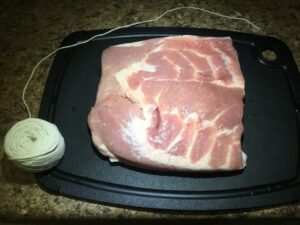
- Roll up your pork belly tight. Using butcher’s twine, tie up the pork belly in the very center of the roll.
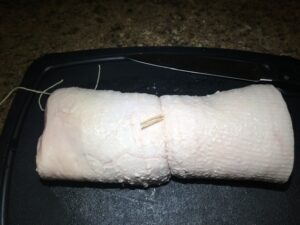
- Tie up the pork belly every inch or so; at least 4 times on each side of the center tie.
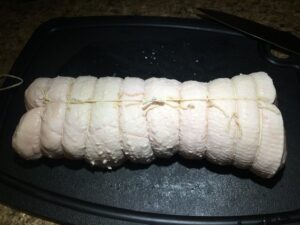
- Heat up the cooking oil in a Dutch oven over medium high heat. Brown the tied up pork belly on all sides for 10-12 minutes in total.
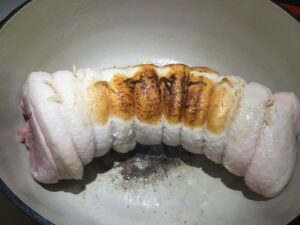
- Mix together the sugar, soy sauce, mirin, and sake. Pour into the Dutch oven. Add in the ginger, garlic, and green onions. Bring to a boil uncovered.
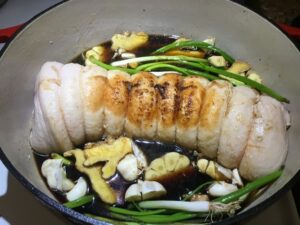
- Place a cover on the Dutch oven. Simmer for 90 minutes, turning every 20 minutes in the sauce.
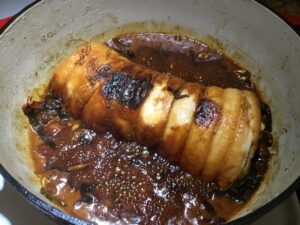
- Refuce the heat to medium low and continue simmering for 30 more minutes.
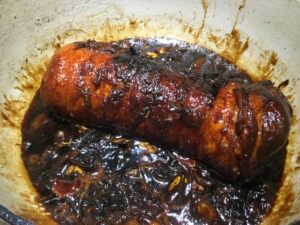
- Take the pork belly out of the pot and let cool.
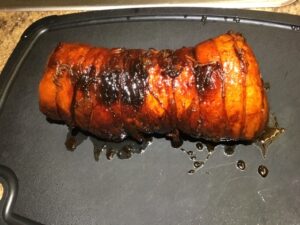
- Strain the sauce of the ginger, garlic, and green onions.
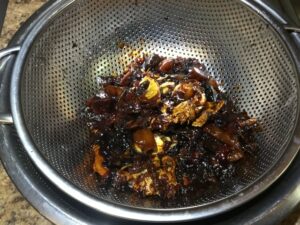
- Place the pork belly in a gallon sized storage bag with 1 cup of the strained sauce. Place in the refrigerator for 24 hours before use.
- Save the rest of the sauce. This is now the tare sauce for the ramen.